Have an old laptop collecting dust?

BRAMPTON ENVIRONMENTAL ALLIANCE  ·  ALGOMA UNIVERSITY

Join the Brampton Environmental Alliance (BEA) and Algoma University for a hands-on workshop where you’ll learn how to convert an older laptop to run Linux. If your laptop is no longer supported by Microsoft, that doesn’t necessarily mean it’s time to replace it! With Linux, you can extend its useful life, keep it secure and avoid sending perfectly good technology to the landfill.

  • Save money: Extend the life of your existing laptop instead of buying a replacement.
  • Help the environment: Reduce electronic waste and keep usable technology out of landfills.
  • Build new skills: Learn something new while connecting with others who care about sustainability.

📅 Date: December 3, 2026📍
Location: Algoma University, 24 Queen Street East, Room A-216

Have an old laptop collecting dust?

Give it a second life with Linux!

Join the Brampton Environmental Alliance (BEA) and Algoma University for a hands-on workshop where you’ll learn how to convert an older laptop to run Linux.

If your laptop is no longer supported by Microsoft, that doesn’t necessarily mean it’s time to replace it! With Linux, you can extend its useful life, keep it secure and avoid sending perfectly good technology to the landfill.

Why participate?

  • Save money: Extend the life of your existing laptop instead of buying a replacement.
  • Help the environment: Reduce electronic waste and keep usable technology out of landfills.
  • Build new skills: Learn something new while connecting with others who care about sustainability.
📅 Date: December 3, 2026 📍 Location: Algoma University, 24 Queen Street East, Room A-216

Space may be limited, so register in advance!
Stop Irresponsible Environmental Exploitation

The environmental assessment process does not represent unnecessary bureauacracy or red-tape. Canada has been blessed with a wealth of natural resources which contribute substantially to our health, our happiness and quality of life. Economic progress often involves the destruction of these resources which, once gone, are either gone forever or extremely costly to repair or replace. So, before we make a decision whether or not to proceed with a development project, shouldn’t we take the time to fully understand the environmental impact on air and water quality, on ecosystem service delivery, on carbon emissions, and on the lives of those directly or indirectly impacted by the damages that project will create?

The Ford Government has been back in the legislature for less than a week yet it is already tabling legislation and putting forward proposals which will create further environmental damage in our communities. Bill 140 (the Building Ontario Faster Act, 2026), was introduced on October 27th. It’s stated purpose is to streamline infrastructure and development approvals, a common theme of many of this government’s omnibus bills. True to form, however, the impact of this bill will be to encourage increased levels of pollution in the province by reducing or eliminating environmental protection guardrails and making it more difficult for the public and other stakeholders to have their positions heard.

If passed, Bill 140 would:

Proposed changeWhy it matters
Blue box program
Remove the requirement for producers to handle certain waste products such as flexible plastics, including plastic bags, wrappers and film.
Remove the requirement to collect bagged or baled overflow materials placed outside of Blue Box receptacles.
Producers would not be incentivized to reduce plastic packaging or change the chemistry to make these products more recyclable. More of these products will end up in landfill, (or burned), with cost being borne by the municipalities contrary to the purpose of the program.
Environmental Assessment Act
Exempt landfill applications from municipal support requirements
Exempts the proposed expansion of highway 69 from advanced environmental assessments
Makes it easier to build new landfill locations taking pressure off of municipalities and producers to reduce, reuse, recycle waste.
Construction of the highway could commence before environmental reviews and indigenous consultation is complete
.
Environmental Protection Act
Would recognize biogenic content in municipal waste as a renewable energy source
Reduces the environmental assessment process for energy from waste facilities making it easier for companies like Emerald to expand waste burning activities. This would lead to higher pollution, elevated health risk, and higher carbon emissions. It means more of the waste cost burden will fall on municipalities rather than on producers and relieves the pressure to reduce, reuse, recycle waste products like plastic.
Environmental Bill of Rights
Proposed changes would allow the government to create, change or erase regulations and policies that impact public health, the environment, public safety with no mandatory advance posting on the Environmental Registry.
It would allow proponents and developers to start environmental damage before the public is even aware this is happening. For instance a developer could clear cut a treed property before permits have been granted.

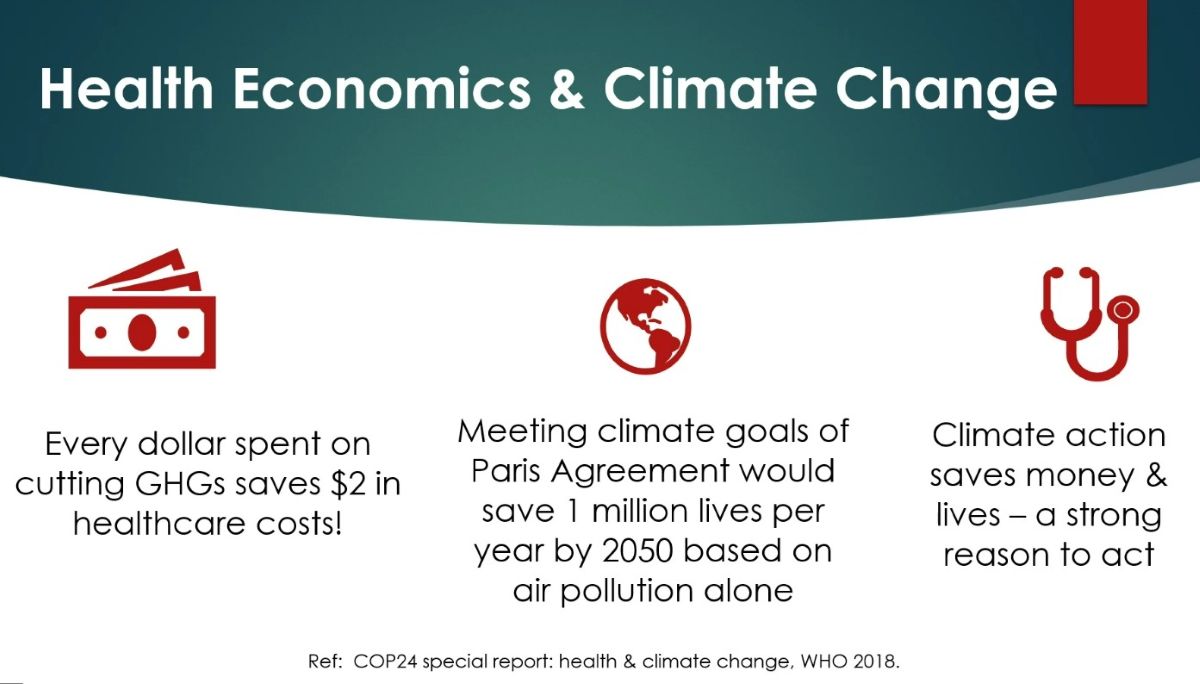
On October 20th, the BEA hosted a webinar on the impact of pollution and climate change on human health. Dr. Mili Roy, a Mississauga-based surgeon, shared many facts including that 6,600 people die prematurely each year in Ontario as a direct result of toxic air pollution, costing Ontario residents $49B in lost productivity and increased healthcare costs each year. And that’s just one aspect of the economic impact of our deteriorating environment. When will the Provincial government realize that a robust ecomomy is dependent on a healthy environment?

What can you do?

Let your MPP know you are not happy with the proposed changes in Bill 140. Or send us an email and we will do it for you.

Attend the upcoming PLAYING WITH FIRE: FACTS AND MYTHS ABOUT BURNING WASTE webinar being hosted by Environmental Defence, November 5th, 7-8:00 PM, with BEA’s Vice-President.

Become a member of the Brampton Environmental Alliance and add your voice to the growing opposition to irresponsible environmental exploitation.

The Environmental Impact of Getting Major Projects Built in Canada

A few months back I wrote to my local MP Ruby Sahota on behalf of the BEA. In my note I expressed concern about the Government of Canada’s discussion paper entitled, “Getting Major Projects Built in Canada”. I published the letter in a previous post. I’ve included the MP’s response below which I received today.

I’m thankful to receive a response and heartened by its thorougness and sincerity. I would have preferred, however, if there had been more specifics to address my concerns about the removal of environmental protections and to indicate how the discussion paper would be modified to provide balance between short-term economic growth and long-term environmental sustainability. At least the government appears to be addressing water and marine ecosystems as a starting point. They are asking for our feedback on this, so let me know what you think after looking at the links provided below. You can add your voice to the BEA or craft your own response.

I’d also be interested in your impression overall. Is our Canadian government striking the right balance between economic growth and environmental sustainability? Take a look at MP Sahota’s letter below and let me know what you think.

Dear David,

Thank you for taking the time to write to me and for sharing such a thoughtful submission on the Government of Canada’s proposals for getting major projects built in Canada. I appreciate you taking the time to outline your concerns and to share the perspective of the Brampton Environmental Alliance.

I know how strongly you and the Alliance have advocated for responsible environmental stewardship over the years, and I appreciate the important point you have raised about finding the right balance between economic development and protecting Canada’s natural environment.

We have been clear that we are not just building Canada, we are building it well. That means creating the infrastructure and economic opportunities Canadians need while protecting our environment, respecting Indigenous rights, and ensuring that projects are developed responsibly.

Marine conservation is both a moral responsibility and a national priority. This means working in partnership with Indigenous peoples, protecting valued waters and species, and respecting local ways of life, while also ensuring that critical infrastructure and key shipping routes remain safe and resilient. This balanced approach can support good jobs, strengthen tourism, and attract long-term investment in modern, sustainable infrastructure.

Water is also at the heart of Canada’s identity, economy, and security. Protecting it is not optional, but fundamental. That is why our government is taking action to safeguard our lakes, rivers, and wetlands through strong measures that protect biodiversity and keep our waters healthy for future generations.

We are also developing Canada’s first National Water Security Strategy to address our biggest freshwater challenges and strengthen water security for communities, the environment, and the economy. Healthy freshwater ecosystems are essential to biodiversity, culture, and the resilience of communities facing challenges such as flooding and drought.

As part of this work, we are seeking input from Canadians on how we can strengthen water security across the country. Given your experience and the work of the Brampton Environmental Alliance, I would encourage you to share your views through the public engagement process. You can participate here. Responses are welcome until October 25th, 2026

To build Canada strong, we must build it together. Our approach is grounded in collaboration with provinces, territories, Indigenous partners, communities, and stakeholders to grow our industries, attract investment, create good jobs, and reduce emissions. Supporting our economy and protecting our environment are not competing goals. They can, and must, be pursued together to secure Canada’s leadership and a stronger, more resilient future.

Thank you again, David, for sharing your perspective and for the work you continue to do through the Brampton Environmental Alliance. I truly appreciate hearing from constituents, like you, and I value our ongoing conversations on these issues, and look forward to continuing to hear your thoughts as this work moves forward. Please continue to reach out to my office regarding matters that are important to you.

Sincerely,

Hon. Ruby Sahota Member of Parliament Brampton North—Caledon Tel. (905) 840-0505 Fax. (905) 840-1778 Ruby.Sahota@parl.gc.ca Get Weekly Updates Here

Calling all Seniors in Brampton South

If you are a senior over 55 living in Brampton, let us know if you are interested in becoming a Sustainability on My Mind instructor. Put on by the Sustainable Community Aid Network (SCAN), this project is an extension to a series of successful events that were delivered in Mississauaga last year. Workshops will be delivered by seniors to seniors living in Brampton South. Workshop topics will be related to wellness and healthy sustainable living.

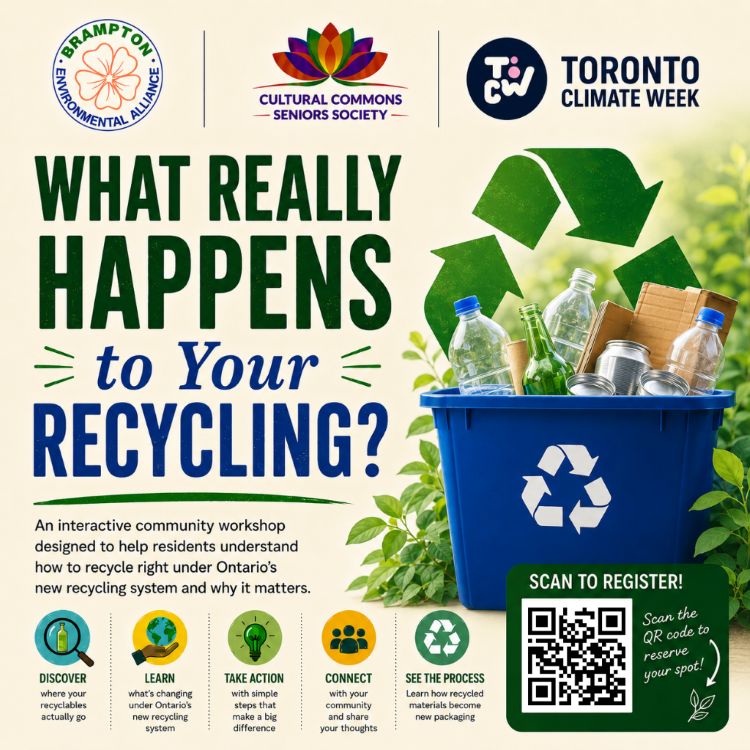
Ever wondered how discarded packaging in the Blue Box becomes new packaging?

Most of us put something into the blue box every week and hope it gets recycled properly. Have you ever wondered what actually happens behind the scenes after the truck picks it up? How much of it actually gets recycled? Or, why materials need to be separated into the blue, black or green bins?

These are important questions that our BEA team is aiming to answer at an upcoming interactive workshop on Thursday, June 04, 2026. There you will learn why it is important to separate your waste, how to dispose of it in a way that has the least environmental impact, and how discarded material, like an old yogurt container, eventually become new packaging again.

Continue reading “Ever wondered how discarded packaging in the Blue Box becomes new packaging?”

My trip to the Netherlands

I just returned from a 2-week bike and boat tour in the Netherlands. It was a transformative experience, seeing first-hand how a society and economy can be built where the car is not the primary mode of transport, where most energy requirements are met by renewable sources, and where climate action is a visible and normalized part of daily life.

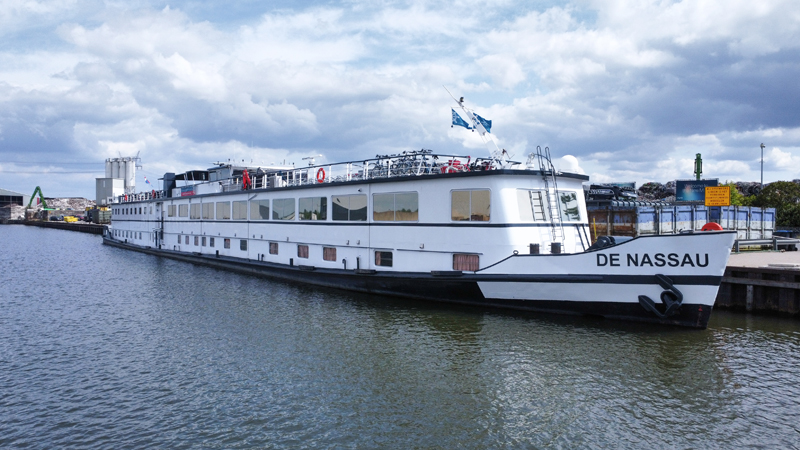
De Nassau ship, part of Boat and Bike fleet
De Nassau ship, part of Boat and Bike fleet. This is the ship we sailed on. Bikes were unloaded onto the dock in the morning. We rode to the next town where the boat would meet us in the evening. Breakfast and dinners were served on the boat and we packed lunches each day to take with us. Photo credit: Boat and Bike
Continue reading “My trip to the Netherlands”

Extended Producer Responsibility, What is it? Why should you care?

Same service, different provider

Have you ever noticed how much packaging surrounds the products we buy? Tiny items delivered in oversized boxes stuffed with Styrofoam or bubble wrap, slices of cheese or bread individually wrapped in plastic envelopes, fruit or vegetables bundled on plastic trays covered in plastic wrap, blister packs for tiny items, embedded on large cardboard shelf hangers, (that are virtually impossible to open), or electronics wrapped in foam, inside a box which is then wrapped in another box.

Peel 2026 recycling guide

All this may be about to change in Ontario. This past Thursday, January 1st, responsibility for residential recycling in the province shifted away from municipal governments. The costs of collecting and disposing of recycled material are now borne by retailers and packaging producers under a policy approach called Extended Producer Responsibility, (EPR).

Continue reading “Extended Producer Responsibility, What is it? Why should you care?”

BEA participates in School Parent Night

On October 29th, BEA members Rajbalinder and Aneet were at Harold M. Brathwaite Secondary School in support of their community engagement event that included parent interviews. Harold M. Brathwaite is a school of approximately 1,700 students with programs including: International Baccalaureate (IB), Specialist High Skills Major in Justice and Business Studies, International Student Program, Developmental Disabilities Program.

Aneet and Rajbalinder attend a community night at Harold M. Brathwaite SS.
Continue reading “BEA participates in School Parent Night”

BEA Attends School Community Events

Ghazanfar, Yarim, Gunjan, and Rajbalinder attend Community Open House at W.G. Davis SPS

Members of the BEA attended two school community events earlier this month.

Gunjan, Noura Bacon, Yarim, Bill attend WG David SPS Community Open House event
BEA members, Gunjan, Yarim, Bill, pose with Noura from W.G. Davis SPS

On October 8th, Ghazanfar, Yarim, Gunjan, and Rajbalinder attended the W. G. Davis Senior Public School Open House. One-Planet Living and Plant-Based Treaty were among the topics discussed with students and parents.

Student spins the One Planet Living Pledge wheel
Continue reading “BEA Attends School Community Events”

BEA presents a workshop on recycling, waste management and composting.

This past Thursday, July 24th, 3 members of our BEA board, including David Laing, Aneet Sandhu & Yarim Hinojosa, gave a presentation to the Knightsbridge Association in Brampton. 

This presentation showed the benefits of proper recycling, waste management, composting and the benefits of eating more plants and how proper diversion of waste can help the region of Peel reach its waste diversion targets. 

Did you know? The Peel Region has set a target to divert 70% of all waste away from landfill by 2036. Currently it sits at 50% and diverting more green bin waste would go a long way in helping the Region achieve their target.

Continue reading “BEA presents a workshop on recycling, waste management and composting.”