As regular readers of this space know, I’ve been critical of the Provincial Government’s environmental track record over the past several years. The list of issues is varied and long, From energy to transportation, conservation authorities to municipal land use decisions, the government’s policies have resulted in the systematic disempowerment of environmnetal protections and environmental oversight bodies.
This, while facilitating increased pollution and carbon emissions, all in the name of economic growth, affordable homes, and or creating new jobs. These objectives aren’t bad. It’s only that our quality of life and even life itself is dependent on having robust ecosystems that provide us with valuable services such as the air we breathe, the water we drink and a comfortable climate in which we live. It is possible to protect the environment while still having a robust economy as shown by countries such as Norway, Sweden, Denmark and the Netherlands. It takes balance and creative policy making, traits our current Provincial government seems to lack.
Equally troubling is the Conservative Government’s efforts to stifle debate in the Provincial legislature and reduce the transparency of their policy’s true intent. The Greenbelt land swaps and subsequent backpeddaling are excellent examples. So it is in the context of the disengenuous nature of this government that I bring your attention to another potential environmental fiasco in the making, this time, related to the ownership of water and wastewater systems, in the Province generally, but specfically here in Peel Region.
A Bit of History
In November 2025 the Provincial Government tabled Bill 60 (Water and Wastewater Public Corporations Act). Passed with little debate and no public consultation, this Bill authorizes the Minister of Municipal Affairs and Housing to take water and wastewater services away from local governments and assign them to separate water and wastewater public corporations (WWPC). Bill 60 sparked controversy when it was passed. In response to public criticism the government passed ammendments to Bill 60 as part of Bill 98 in the spring of 2026. Key amendments include:
- Restricted Share Ownership: Shares of a designated water and wastewater public corporation (WWPC) can only be issued or transferred to a municipality, in the Province of Ontario, the Government of Canada, or an agent of any of them. [1, 2]
- Asset Transfer Controls: A new section (Section 9.1) prohibits a WWPC from transferring or selling its water and sewage infrastructure assets unless the corporation’s board of directors explicitly declares the asset is no longer required for those services. [1, 2]
- Debt Separation: Long-term municipal debt obligations cannot be directly transferred to the new corporation. The Minister is given regulation-making authority, however, to require the corporation to make cost-sharing payments back to the municipality for capital works debt. [1, 2]
- Labour & Service Continuity: The amendments guarantee continuous employment, successor rights, and pay equity protections for municipal employees transitioning into the new corporate structure. Existing employment, insurance, and collective agreements are carried forward seamlessly.
- Regulatory Oversight: Systems managed by these public corporations will continue to be treated as municipal drinking water systems under the Safe Drinking Water Act, 2002, preserving existing public health oversight and operator certification rules. [1, 2]
While groups like the Association of Municipalities of Ontario (AMO) welcomed these adjustments which appear to protect public sector ownership, the bill still faces opposition from environmental advocates and labour organizations. Critics argue that allowing shares to be held by an “agent” of the government leaves a loophole for institutional investors (like public pension funds) to financialize water infrastructure meaning a focus on shareholder value rather than ratepayer efficiency. [1, 2, 3, 4].
So what’s the real story?
I recently spoke with Rebecca Kolarich, Water Program Manager with Environmental Defence. Her analysis is that, if the Province was sincere about not privitizing water and waste water systems, then the government could have built more safeguards into the ammendments of Bill 98. According to Rebecca, “Shares can be held by an ‘agent of the government’ but the legislation doesn’t include a proper definition of what an agent is,” “In addition” she continues, “Bill 60, as written, allows the Minister of Municipal Affairs and Housing to designate WWPCs under the Business Corporations Act. By definition these are for-profit organizations that are legally required to make money. Instead the Province could have required these companies to be formed as Municipal Services Corporations”.
Municipal Services Corporations (MSCs) are distinct, business-like entities, wholly owned by a municipality (or shared with other public-sector organizations) to deliver public services or manage infrastructure. MSCs may be set up as, for-profit, or not-for-profit but the difference is that they are strictly publicly accountable and the sole shareholder is the municipality, meaning all dividends and profits flow directly back into the public system rather than to private investors. That the Provincial Government chose a for-profit legal model where shares can be held by independent agents, suggests that the intent is to leave the door open for these services to be privatized.
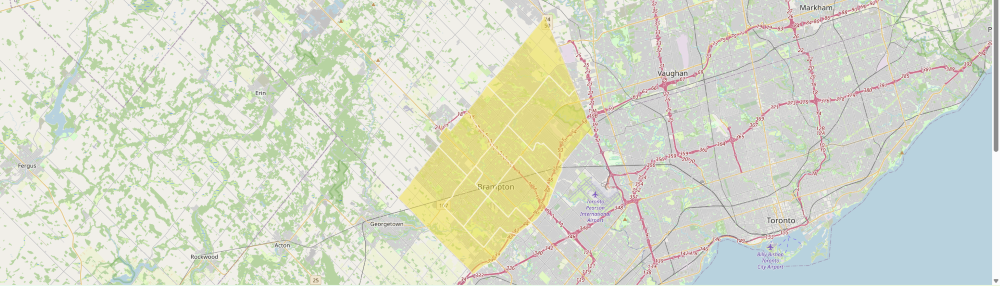
The situation in Peel is particularly troubling. By 2029 jurisdiction over water and wastewater services will be transferred from Peel to the three lower-tier municipalities which will then be required to deliver services through a newly created WWPC. According to an article published in the Carleton University News, ownership of all of the water and wasterwater infrastrucutre assets, “would be transferred to the WWPC, while Peel’s existing debt remains with the municipal government”. If that happens Peel’s water and wastewater infrastructure would be owned by a for profit company, while Peel’s property taxpayers would be on the hook for paying down Peel’s debt obligations. The very fact that this could happen should be unsettling to all Peel residents.
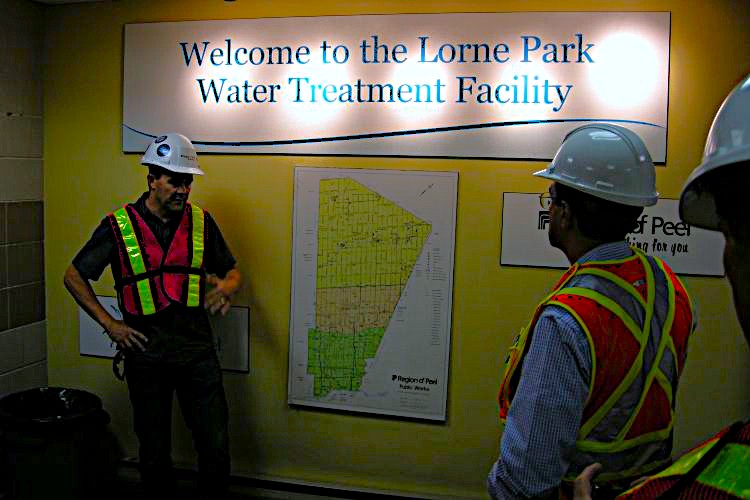
The big question here for the Provincial Government is, why fix something that doesn’t appear to be broken? Peel Region boasts a highly ranked water and wastewater track record, consistently achieving a 100% inspection rating from the Ministry of the Environment, Conservation and Parks across its municipal drinking water systems. The region successfully delivers daily services to over 1.5 million residents, treating over 1.7 billion litres of drinking water and 660 million litres of wastewater daily. [1, 2, 3].
Bill 60 and Bill 98 aligns with seemingly broader efforts to both expand financialization of Ontario’s public assets while at the same time trasferring power away from municipal governments and non-government organizations such as conservation authorities.
Over the past 6 years, municipalities have lost much of their control over things like road engineering, environmental regulations and land-use management. Sources of external municipal income have been curtailed especially related to development charges and automated speed enforcement cameras. More progressive tools to change traffic patterns like road tolls and congestion charges are a non-starter in the Province. Municpalities can no longer use bike lanes as a traffic calming measure or as a way of encouraging more active modes of travel. The Province’s push to build highway 413 caused massive changes to Brampton’s integrated development plan for Heritage Heights, destroying the complete street urban boulevard concept which could have been an economic and cultural focal point for the area.

Ministerial Zoning Order’s (MZO) are another power centralization factor that have now become the norm for pushing through contentious development projects. The Minister can use an MZO to override the wishes of a municipal council or the recommendations of staff. The Province has a track record of forcing municipalities into expanding their urban boundaries when it may make more sense to support higher housing density instead, thus preserving land for green space and agricultural uses.
The government is also disallowing muncipalities from including climate change policies in their official plans. Municipal governments can no longer impose higher building standards than what the Provincial building code specifies. Progressive councils who wish to hold their developers to a higher standard, such as incorporating green roofs or solar panels into building design no longer have that option.
Urban tree canopy within parkland greenspace is one of the defining characteristics of great cities. Yet changes to parkland dedication policies now allow developers more lattitude on what counts towards minimum parkland dedication requirements. This may lead to less parkland as a ratio of population, as cities across the Province continue growing. Building great cities does not seem to be a priority for this Provincial government, even though greenspace and tree canopy contributes significantly to health, quality of life and the ability of cities to adapt to climate change.
Most recently the Province is directing the Independent Electricity System Operator IESO to accommodate the needs of large power consumers, like AI data centres, potentially at the expense of standard ratepayers like you and me. This is yet another problem that this provincial government is creating for us. I will explore this further in a future article.