Heart Lake Turtle Troopers receives generous merchandise donation from Home Depot

By: Leah Nacua, Heart Lake Turtle Troopers

Three members of Heart Lake Turtle Troopers (one of whom is a Home Depot associate), pose with two other Home Depot associates along with donated merchandise

With support from the BEA, Heart Lake Turtle Troopers was honoured and grateful to receive a generous donation of merchandise from The Home Depot (Brampton #7006, located at Steeles & Hwy 410)! 

We received an assortment of tools and materials that will be used for building and installation of nest-protection boxes, as well as totes that will be used for transporting injured turtles to the Ontario Turtle Conservation Centre in Peterborough. 

Heart Lake Turtle Troopers will be engaging with ~20 volunteers from the Home Depot team later in May, when we show them the nest-protection work we are doing at Loafers Lake Park.  They will also help us do a park clean up at Loafers Lake.  

Heart Lake Turtle Troopers is a Brampton-based volunteer group. Our mission is to support the protection and monitoring of the local turtle population through a citizen science volunteer program, by working in partnership with community stakeholders to raise community awareness, recruit and engage citizen volunteers and organize and deliver public engagement activities. Visit our Facebook page to learn more about our activities or join our group.

Brampton’s Earth Day Celebration – A Warm Reception on a Cold Day

By: Rosemary Keenan, Sierra Club Peel Chapter Chair and David Laing, President, Brampton Environmental Alliance
Earth Day Activities

It was a brisk, enjoyable and energizing day at the first ever Grown Green Awards Celebration held at Norton Place Park this past Saturday April 23rd. Norton Place Park is a hidden gem in the heart of the City with a small lake beautifully surrounded by trees and trails. The Earth Day event was about celebrating the Brampton City’s and its residents contributions to a more environmentally friendly world.

Continue reading “Brampton’s Earth Day Celebration – A Warm Reception on a Cold Day”

Have your say on Brampton’s Parkland Dedication strategy

Etobicoke Creek Trail Conservation Park

An article in last month’s BEA Weekly described the ecosystem services provided by Brampton’s tree canopy and invited residents to offer their opinions on the City’s Urban Forest Management Plan. The City is also interested in public feedback as it works to update its Parkland Dedication by-law by this fall to conform to changes in Provincial regulation. Why is this important and why should you care?

Brampton is under tremendous pressure to accommodate population growth and maintain or increase the availability of affordable housing within its boundary limits. At the same time it strives to maintain, or improve, the quality of life for its residents and to keep Brampton as a city where people want to come to work, live and play.

An effective way to improve life quality for people living in urban settings is by providing easily accessible parkland. Access to the outdoors and communing with nature are critically important to our mental health. Providing parks and natural settings for recreation and exercise is an effective way to promote healthy active living. This is especially true in times of emotional stress, such as dealing with the effects of a global pandemic.

A December 2021 Chinese study, published in the National Library of Medicine concludes, “To achieve the goal of promoting mental wellbeing through urban planning and design during the future pandemics, policymakers and planners are advised to provide more well-maintained and accessible parkland and encourage residents to use them with proper precautions.”

Adequate parkland is an important part of economic, environmental, and social sustainability of any urban centre. In addition to supporting better health outcomes, naturalized outdoor spaces also provide a myriad of eco-system services, including air purification, temperature regulation, water filtration and flood management.

Brampton’s 2040 vision calls for the establishment of an “Eco-Park” to conserve and enhance natural systems within the City while optimizing the balance between environmental conservation on one hand and public accessibility on the other. The concept of the Eco-Park is that it will enhance Brampton’s reputation as a “green city” by evolving the natural heritage system into a network of “Eco Spaces” consisting of, parks, green spaces, green infrastructure streetscapes, utility corridors, and the front and back yards. All these spaces conforming to a set of established principles as defined in the City’s Eco-Parks strategy.

But where does the land come from to support all of these parks and recreational facilities? It turns out that much of it comes from developers through a process called “Parkland Dedication”.

Parkland Dedication is a city by-law under the planning act that requires a portion of land being proposed for development, (or re-development), to be conveyed (given) to the City for parkland. The amount depends on the land’s intended purpose. For commercial or industrial development, 2% of the property must be given to the city to be used for parkland. If the property is to be used for residential purposes, then the greater of 5%, or one hectare for every three-hundred dwelling units must be made available for parkland. This amount is exclusive of valley lands, (floodplain), water courses, buffers or easements.

The by-law also allows the developer to provide cash in lieu of handing over a portion of development project land. The cash in lieu concept is designed for the city to pool funds to buy larger tracts of land to create a smaller number of larger parks rather than having little parkettes associated with each individual development project.

Historically the Parkland Dedication by-law has allowed the city to amass significant parkland. But the approach to parkland dedication is coming under increasing criticism.

First, there is growing pressure from the development industry to cap parkland funding. The arguments are that the cost of cash in lieu of parkland is added to the home purchase price making it less affordable. It also tends to discourage higher density development where the parkland cost can be a significant portion of the overall cost of the development project based on the one hectare per 300 residential unit formula.

The second issue is that the city can sit on the reserve cash for years without finding the right opportunity to buy land suitable for parkland development. Today the reserve exceeds $100M!

The third issue is that parkland is not expanding as fast as the city is growing. Brampton currently provides 6.3 hectares of parkland for every 1,000 residents. That compares favourably to larger cities like Toronto, or Vancouver that have less than half of what we currently enjoy. But, Brampton’s population is expected to grow more than 50% in the next two decades and this growth will see increasing pressure on Brampton’s parks and green spaces unless park space is added at the same rate.

Parkland dedication is a complicated issue that will require complex solutions. The most important thing you can do is to let city staff know you care a proper ratio of parkland to people as the City grows in population and that parkland should be accessible to all by being equitably distributed across the city. Please take a moment to provide your opinion on the City’s park strategy by completing the Park’s Survey.

BikeBrampton Announces 2022 Outdoor Schedule

Recent reports from the International Panel on Climate Change paint a grim future for our planet in the coming years unless we make dramatic changes in how we produce and consume energy. That scary analysis should be enough to mobilize us to take action. But what can we, as individuals, realistically do?

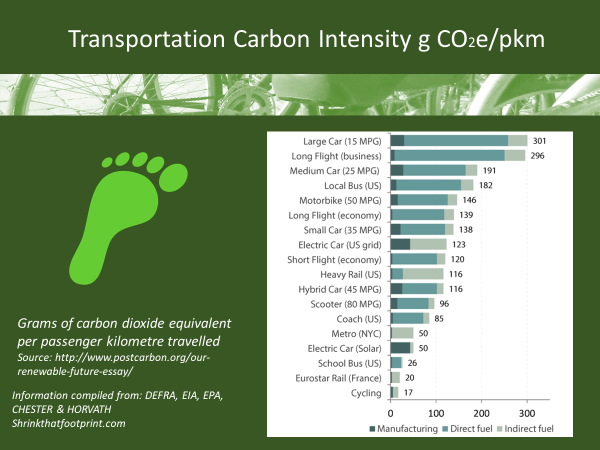
Carbon emissions are a waste by-product from our production and use of energy. We can lower emissions either by using less energy or by using energy from less wasteful sources. It turns out that one of the most effective things we can do here in Brampton to reduce emissions is to use our cars less and our bodies more.

A 2019 energy audit completed for the city’s Community Energy and Emissions Reduction Plan, found that Brampton’s cars and trucks account for almost 60% of the city’s carbon emissions. And a 2016 transportation survey found that, of the 2.3M transportation trips taken in Peel Region by car each day, the median distance is just 6.3 km. That’s an hour’s walk but less than a 20 minute bike ride.

The human body uses energy very efficiently to move itself, especially when travelling by bicycle. The calories contained within a glass of orange juice will carry a cyclist about 5km. That same amount of energy derived from gasoline burned in a car’s engine, typically won’t carry the driver to the end of their driveway.

Transportation carbon intensity
Creating a cycling culture Katie Whittmann (2015)

Adding costs to the equation makes the case for travelling by bicycle even more compelling. Brampton drivers spend just under $1B per year on gasoline and diesel fuel. That’s on top of the costs for, licensing, road construction and maintenance as well as the vehicle capital and repairs. Overall, a typical motorized vehicle costs more than $6,000/year to own and operate, whereas the average cost of ownership for a bicycle is less than $100 annually.

Barriers to cycling

Access to a bicycle, perceived distance, perceived comfort, lack of skill or concerns about theft, weather and arriving sweaty to the destination are among the many reasons cited for why more people don’t use a bicycle for transportation. A barrier not often discussed, however, is a lack of cycling culture.

Cycling for transportation is considered the norm in many parts of the world where conditions are similar to those here at home. But, in many North American cities, cycling behaviour has been discouraged to the point where a person who uses a bicycle for anything other than recreation is considered second-class or more than a bit odd. Eleanor McMahon, a past Ontario cabinet minister, past Board Chair of Share the Road Cycling Coalition, and the current President and CEO of the TransCanada Trails Association, once said that, “cycling is known as a rich man’s sport, and a poor man’s second choice.”

Fortunately that perception in Ontario and specifically in Brampton is beginning to change. There is no question that cycling popularity is on the rise, especially since the pandemic began encouraging more outdoor activities. Bike retailers have had a hard time keeping up with demand and long wait times for new bicycles have only recently begun to ease.

The city of Brampton responded in 2020 initiating a “Streets for People” campaign that is building bicycle infrastructure as part of an Active Transportation Master Plan. Last year 15km of linear bicycle infrastructure was added including, multi-use paths, urban shoulders and on-street bike lanes. This year city plans call for an additional 31.5km that will flesh out a significant portion of the city-wide cycling network.

Safe infrastructure, is only one of the required elements leading to the cultural shift necessary to get folks out of their cars and onto their bikes. Education and encouragement are two other important factors. That’s where BikeBrampton and the Community Cycling Program comes in.

BikeBrampton is a volunteer group advocating for better and safer active transportation choices in Brampton and Peel Region. As the name implies active transportation is the term used to describe destination type trips that are mostly or entirely human powered including, cycling, walking, skateboarding, etc. But BikeBrampton also partners with PCHS (Punjabi Community Health Service) to deliver the Community Cycling Program (CCP) on behalf of Peel Region.

The purpose of the CCP is to increase cycling mode share by creating a cycling community and normalizing cycling as a legitimate form of transportation. The program increases access to a working bicycle through a bike lending library and by teaching basic bike maintenance skills. It also helps build familiarity, comfort and confidence for riding on existing infrastructure by teaming new and experienced riders as well as through skills training programs and group rides.

One of the more popular aspects of the program is the series of ‘BikeWrx’ pop up events at different sites in both Brampton and Caledon throughout the spring, summer and fall.

Last year’s pop ups proved very popular. According to Sonia Maset, the Brampton and Caledon Bike Hub Program Manager working for PCHS, “Our goal at the beginning of the summer of 2021 was to provide 100 hours of service to 2,000 residents between July and October at 13 different locations, 10 in Brampton and 3 Caledon. In four months, we delivered 120 hours to 2,348 residents over 46 events spanning 17 locations in the two municipalities.”

Services at these events included free bike bell and light installation (courtesy of the Region of Peel), free bike inspections, basic repairs, bike and helmet fittings, route
planning, trail etiquette, group rides, obstacle courses, and one-on-one rider education.

shows a typical pop up venue
2021 Professors Lake Pop-up

The BikeBrampton Bike Hub team is preparing once again for a full slate of outdoor events for this year in both Brampton and Caledon. Bring your bike for a free inspection and minor tune-up. Learn about route planning and bike safety. Get a free bell or bike light while supplies last. Check out the schedule on BikeBrampton.ca. Sign up to the BikeBrampton News to stay up to date on the latest event information including Bike the Creek, Brampton’s signature cycling event.

Brampton Council Approves Centre for Community Energy Transformation

CCET logo courtesy City of Brampton

This past Wednesday Brampton Council unanimously approved seed funding for the Centre for Community Energy Transformation, or CCET. This is a very important milestone on the city’s path to a low-carbon future.

The concept for the CCET started in 2018 as part of the Brampton 2040 Vision exercise, one of the most comprehensive public engagement process the City has ever undertaken. The Vision maps how the City will grow over the next 18 years, living the cultural mosaic of our diverse population.

The importance of Brampton as a green, environmentally sustainable city, featured prominently in the public feedback sessions. In response, the vision document called for the creation of an independent organization that would help steward Brampton’s green journey. The CCET is now that organization.

Using 2016 as the baseline year, the City set targets to cut carbon emissions by 30% by 2030, 50% by 2040 and 80% by 2050. Improving building energy efficiency is an important part of achieving Brampton’s Energy and Emissions Reduction Plan.

Courtesy City of Brampton

Residences are the second largest source of climate changing emissions. The average Brampton home consumes more than twice as much energy compared to an A-rated home in Germany. Brampton has a large number of older homes that are less efficient. And most homes burn natural gas for heat and hot water.

A major purpose of the CCET, therefore, will be to help residents reduce energy consumption and convert to lower carbon energy sources. The CCET will work with banks, municipalities and other governments to make it easy for homeowners to finance building retrofits. It will also work with industry and post secondary institutions to recruit and train the auditors, technicians, contractors and installers necessary to create low-risk retrofit solutions at scale that will pay for themselves over time through reduced heating and air conditioning costs.

Depending on the age of the house, retrofits could be as simple as sealing doors and windows or adding insulation to attics, walls, and basements. Or, it could involve replacing natural gas furnaces with high efficiency electric heat pumps, installing solar hot water systems or tapping into a “district energy node”. Regardless, the changes promise exciting times for both residents and business as the Centre for Community Energy Transformation develops over the coming year.

A Downtown Development Project with Sustainable Intent

The past few months has seen a flurry of submissions for Ministerial Zoning Orders (MZO) in the City of Brampton. So the first refreshing thing about the new development being proposed for the southeast corner of Nelson and Elizabeth Streets is that the applicant, Greenwin + Sweeny Holdings, is not requesting fast-track consideration via an MZO.

The development checks boxes for many of the City’s Sustainable Community Development Guidelines including, compact form, mixed use, walkability and cultural heritage. The project plan includes two towers, 42 and 34 stories respectively that will provide a mix of 205 hotel suites, 694 sq m of retail space, and 771 long-term rental residential units, 40 of which will be affordable housing. The project’s location and building concept is designed to enhance walkability and to “attract residents who will want to live in alignment with ‘One Planet Living’ principles.”

Initially the buildings will provide 477 vehicular parking spaces on four floors, one below grade and three above. The three above grade parking levels, however, can be repurposed for additional commercial or residential space, as Brampton’s GO transit hub expands services and the need for personal automobiles lessens.

The project will conserve and restore the heritage property at 24 Elizabeth, once home to Brampton’s first Mayor, John Haggert from 1874-76. The house could be repurposed as a hostel or restaurant/café with an outdoor patio. Landscaping amenities including street trees and public art help flesh out the project description.

As details emerge we will be looking for the project to include innovative sustainability features in the final design such as, ground sourced energy for HVAC, solar panels and or green roof systems, grey water management systems and, bird friendly windows. 

The city is creating a Centre for Energy Transformation that will be operational in the next two years with the intent to make Brampton and Peel Region a world leader in energy management and carbon reduction. Imagine this development as a model of sustainable urban design in Brampton’s downtown.  We are excited by the possibilities!

Nurturing Neighbourhoods Program Survey-Participate Today!

Nurturing Neighbourhoods
Nurturing Neighbourhoods logo

The Nurturing Neighbourhoods program provides residents the opportunity to play an active role in shaping the future of their neighbourhood! 

Complete the Nurturing Neighbourhoods survey and participate in the online mapping tool – this will allow us to capture comments from you; telling us what you love about your neighbourhood, what you wish was there, and where we could do better.

The survey is offered in multiple languages including Gujarati. Simply select your language at the top of the survey screen. Participants completing the survey by January 30, 2022, will be entered into a draw for a chance to win 1 of 10 prizes.

Learn more!

BEA Meeting Wednesday December 8, 2021 6:15pm

The next meeting of the Brampton Environmental Alliance will be held virtually on Wednesday December 8th. Informal networking at 6:15pm. The meeting starts at 6:30pm sharp! Click the Register button for your free ticket.

Presentations

Dianne Saxe

Keynote presentation by Dr. Dianne Saxe. Dianne Saxe is one of Canada’s most respected environmental lawyers and was the independent Environmental Commissioner of Ontario, until the Conservative Government rolled that position under the Office of the Auditor General in 2019. Dianne is running as a member of Provincial Parliament candidate for the Green Party of Ontario (University Rosedale riding) in next year’s Provincial election. Dianne is an articulate defender of the environment and a champion of the new green economy. The BEA is thrilled Dianne has agreed to share her passion and environmental knowledge with BEA meeting participants.

Tooba Shakeel – LEAF newsletter

Spotlight presentation by Tooba Shakeel. Tooba is a Senior Coordinator of Sustainable Neighbourhoods Program (SNAP) at Credit Valley Conservation (CVC). She is an ISA Certified Arborist, an EcoDistrict Accredited Professional and a Board member of LEAF (Local Enhancement & Appreciation of Forests) a Toronto-based not-for-profit group dedicated to urban forest protection. Thanks to Tooba for agreeing to share information about CVC programs in Brampton including the Fletcher’s Creek SNAP!

After the main meeting, those who wish to become more involved in the BEA can join one of the three working groups described below. Sign up to join one of the three working groups here.

Working Groups

  • Events
    This group coordinates events for members and assists with events for residents – BEA Collaboration event, Brampton Earth Day event
  • Education and Resources
    This group arranges talks on environmental topics, using the One Planet principles of focus: Land and Nature, Culture and Community, Travel and Transport as they relate to Brampton. The group also helps connect members to needed resources and expertise on financing and various environmental topics
  • Advocacy
    This group helps coordinate and amplify community advocacy campaigns and environmental initiatives under the three One Planet principles above.