Hosted by Brampton Environmental Alliance in collaboration with Toronto Climate Week Sunday June 7, 2026 | 12:00 PM – 1:00 PM Dorchester Park, Brampton (Meeting point details will be confirmed upon registration)
What if your front yard, backyard, or boulevard could become a haven for bees, butterflies, and the plants that sustain them — right here in Brampton?
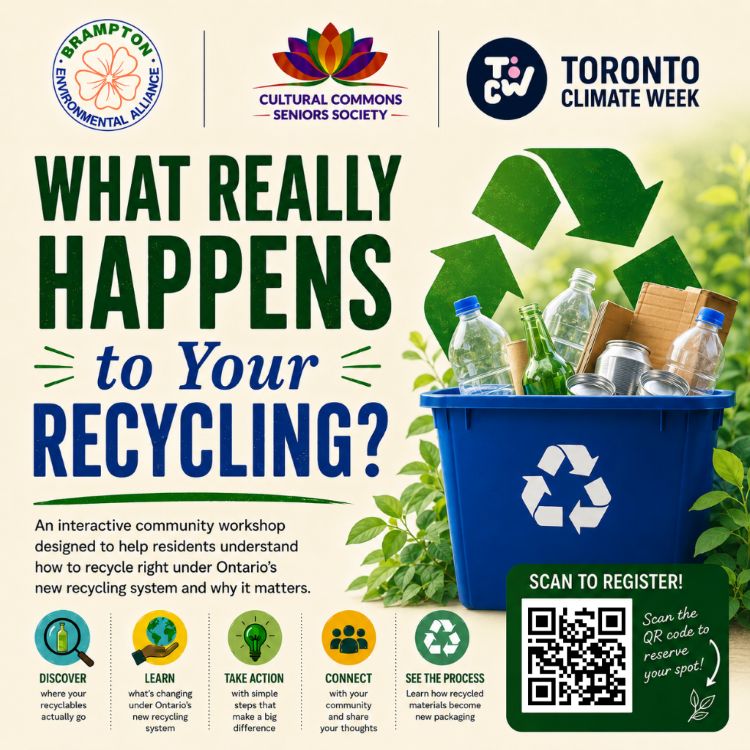
Most of us put something into the blue box every week and hope it gets recycled properly. Have you ever wondered what actually happens behind the scenes after the truck picks it up? How much of it actually gets recycled? Or, why materials need to be separated into the blue, black or green bins?
These are important questions that our BEA team is aiming to answer at an upcoming interactive workshop on Thursday, June 04, 2026. There you will learn why it is important to separate your waste, how to dispose of it in a way that has the least environmental impact, and how discarded material, like an old yogurt container, eventually become new packaging again.
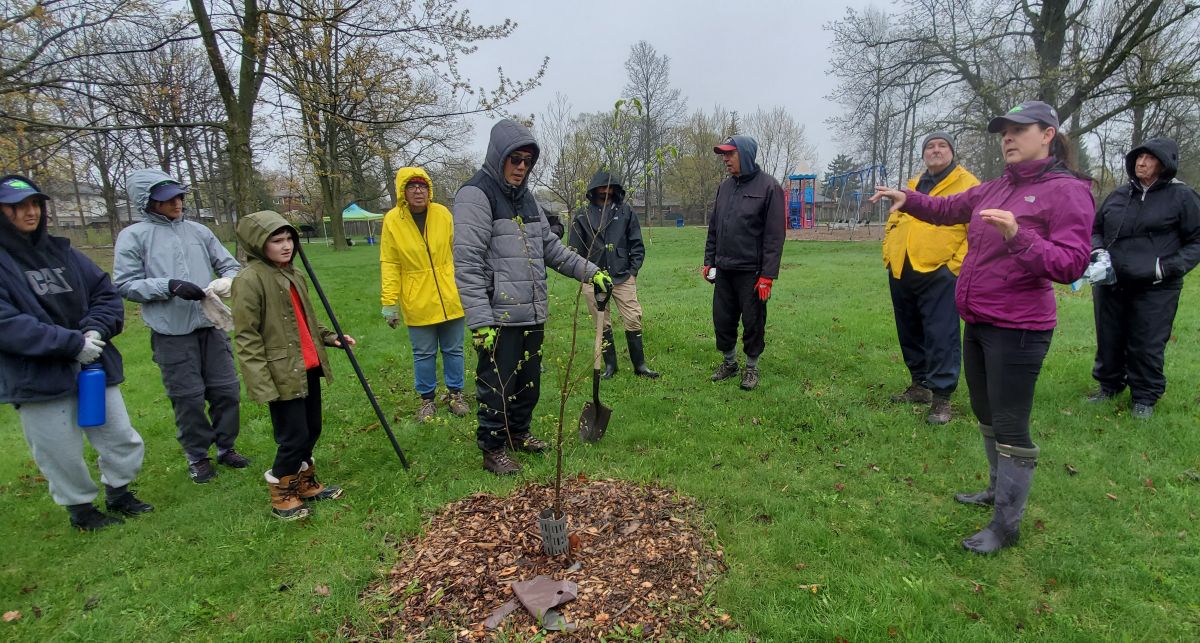
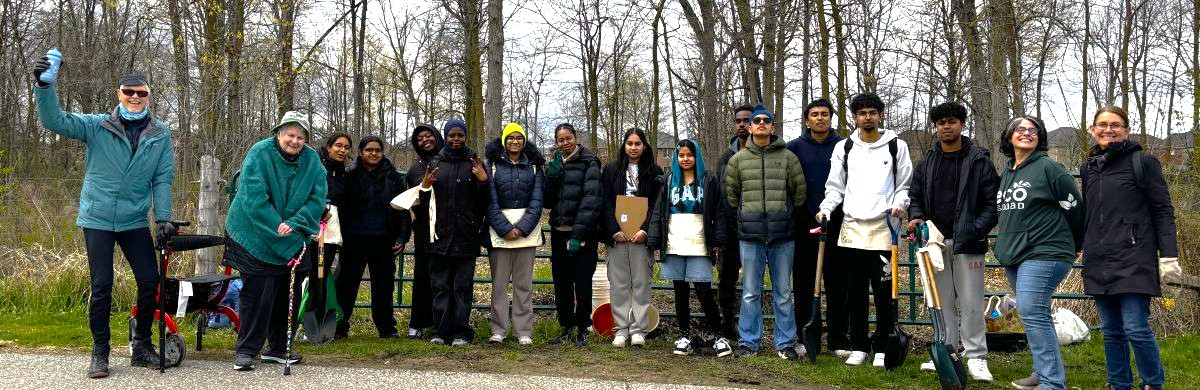
The BEA has partnered with Brampton Forestry and the Association of Canadian Educational Resources, (ACER) to provide tree monitoring services to sites at Batsman and Gore Meadows Parks. Students from Louise Arbour and Fletcher’s Meadows Secondary Schools participated in the 2-day event, Batsman Park on May 02nd and Gore Meadows Park on May 16th.
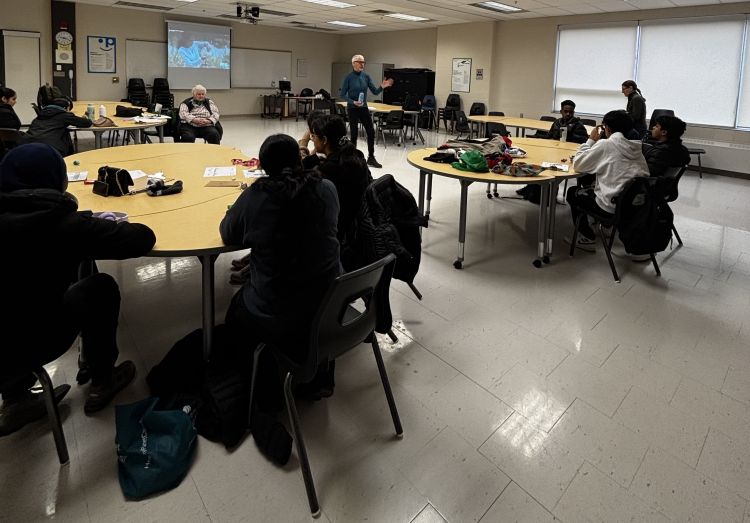
After introductions I started each session by explaining the ecosystem services that trees provide. Trees help to keep our cities cool during increasingly hot summer months. They absorb carbon dioxide and release oxygen that all animals, including humans, need to breathe. They help to slow down winter winds keeping our cities warmer during the colder months. They provide habitat for urban wildlife, And, finally trees are beautiful to look at. They provide city – dwellers an opportunity to engage with nature which has been shown to improve both physical and mental health.
Alice Casselman, ACER’s President instructed students on the use of tools used to measure tree height, trunk diameter and the volume of the tree crown, (the area covered by branches and leaves). The students also learned to identify tree species, and common diseases affecting tree health. They received instruction on proper mulching techniques to ensure that the ground around the tree trunk stays moist while preventing trunk mold growth and protecting delicate roots.
The students then went out to the planting areas to perform the measurement tasks, record the results on their data sheets, and spread city provided mulch around each tree as required.
Over 100 trees were measured over the two days and over 200 trees received mulch.
Brampton’s Forestry Department will receive the collected data and use it to help inform the city’s urban forest management plan.
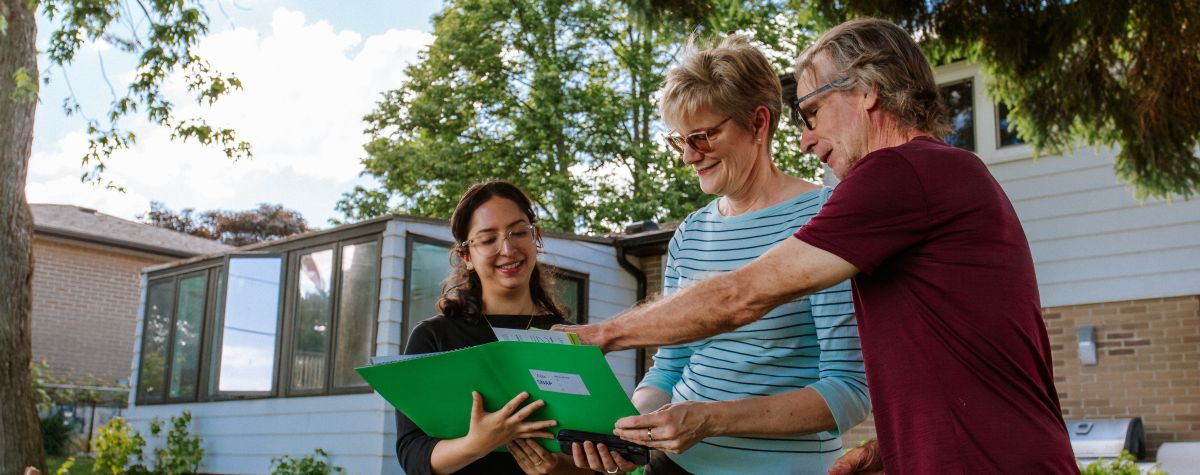
This past week I met with Sarah MacKell, from TRCA. Sarah is a Program Manager with the Sustainable Neighbourhoods Action Program (SNAP). You can read about the activities that the BEA has done with the Bramalea SNAP team over the past several years here.
Sarah was telling me about the Climate Ready Homes program that TRCA started in September 2025. The program builds on the success of SNAP. Climate Ready Homes is designed to help homeowners make practical, affordable upgrades that boost comfort, save money, and prepare for a changing climate. It provides access to personalized guidance, financial incentives and educational workshops on a variety of topics including:
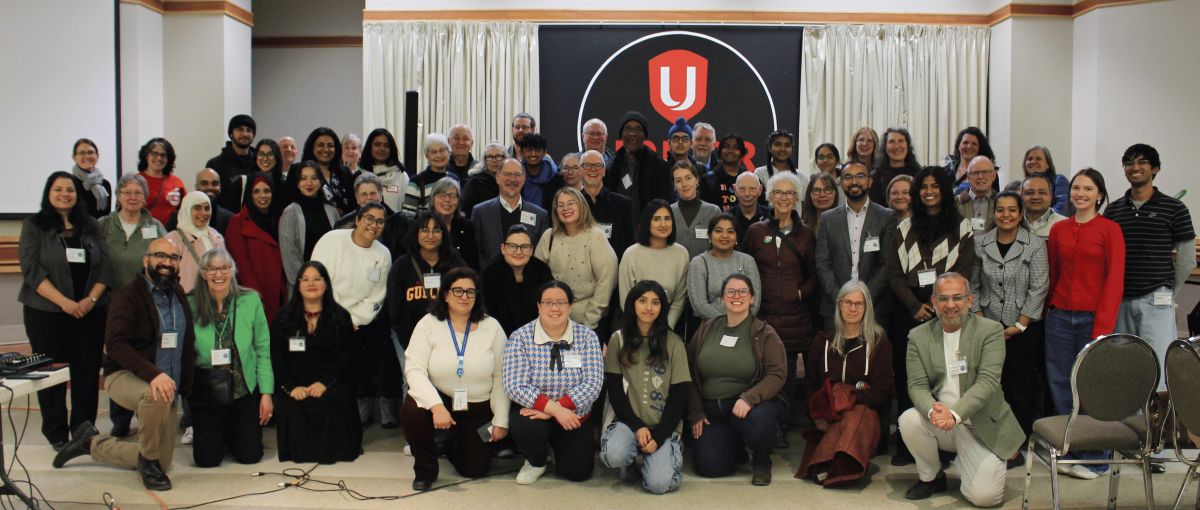
Over 100 people, aged 11 to 80, from all different walks of Brampton life, attended the Brampton Environmental Alliance Annual General Meeting this past Monday March 02nd. Co-hosted by BEA Board members Amisha Moorjani and Gunjan Sharda, the meeting took place at the Unifor Local 1285 Hall, where the group was warmly welcomed by Local 1285 President, Vito Beato following the land acknowledgement delivered by BEA Board member Yarim Hinojosa.
An appeal written by BEA youth council member Srishti Rao
Do you believe in a cleaner, healthier, more environmentally sustainable Brampton? Imagine a city where we can protect green spaces, reduce waste, promote healthier lifestyles, and work together on environmental solutions that matter?
The Brampton Environmental Alliance is pleased to invite members and guests to the Annual General Meeting.
When: Monday March 2, 2026 6:00-8:30pm Where: Unifor Local 1285 Hall, 1 – 23 Regan Road Brampton ON L7A 1B2
Members will elect the 2026 BEA Board and help the Alliance determine its priorities for 2026 and beyond. The action-packed agenda will cover topics of interest including:
Monitoring Brampton’s Air Quality (impact of the Emerald expansion),
Environmental Priorities – a city of Brampton perspective
Environmental Sustainability – A Brampton business perspective
On the Campaign Trail – Making the environment an 2026 municipal election issue
We are pleased to welcome the following guest speakers:
Pam Cooper – Manager, Environmental Planning, City of Brampton
Karen Wirsig – Environmental Defence
Jaipaul Massey Singh – CEO, Brampton Board of Trade
Register to receive agenda updates The meeting is free and open to EVERYONE whether a BEA member or not. (Only BEA members are allowed to vote on BEA business matters).
Space is limited. Register now to reserve your seat
You will be automatically added to the list to receive agenda updates and newsletters
So what has the Brampton Environmental Alliance been up to in 2025 and why should you care? Let me start by answering the second question first. While economic challenges such as food inflation, home affordability and U.S. tariffs dominate the news cycle, the impacts of climate change and environmental destruction take bigger and bigger bites from our pay cheques each year while negatively affecting the lives of every Canadian.
Since 2020, Toronto and Region Conservation Authority has teamed with City of Brampton, the Federal Government’s Healthy Communities Initiative, and United Way, to fund projects in Bramalea’s K, E, and F sections as part of the Bramalea Sustainable Neighbourhood Action Plan (SNAP). More background about the Bramalea SNAP project can be found in a previous post.
On October 29th, BEA members Rajbalinder and Aneet were at Harold M. Brathwaite Secondary School in support of their community engagement event that included parent interviews. Harold M. Brathwaite is a school of approximately 1,700 students with programs including: International Baccalaureate (IB), Specialist High Skills Major in Justice and Business Studies, International Student Program, Developmental Disabilities Program.