The Toronto and Region Conservation Authority is asking for public input as it prepares an update to the watershed plan for the Etobicoke Creek. The last watershed plan was prepared in 2002 and updated in 2010.
The Etobicoke Creek flows for about 35km from northwest to southeast. It starts in southern Caledon, travels through forests, open areas, a dozen or more parks, three golf courses and hectares of residential, commercial and industrial properties. It runs past Main Street in downtown Brampton, past the western end of Toronto Pearson Airport, becomes the boundary line between Toronto and Mississauga. Eventually the creek empties into Lake Ontario along the shores of Etobicoke at the western edge of Toronto.
Second only to the Don River watershed in area, the Etobicoke watershed covers over 200 square kilometres. The watershed is classified as heavily urbanized with almost 60% of the area designated as urban, 28% rural and only 12% as natural. The urban pressure on the watershed has been increasing steadily over the past several decades and watershed health as measured by water quality, habitat loss, biodiversity loss, flood protection and erosion control has continued to decline.
The Etobicoke Creek watershed provides natural habitat for many species of plants and animals including birds, fish, mammals and amphibians. As mentioned it supports dozens of parks, for both active and passive recreational activities and provides much needed areas for overland flood management and protection. Its future depends on the Town of Caledon and the rest of Peel Region growing sustainably, putting as little additional strain as possible on already fragile eco-systems.
Please let the Toronto and Region Conservation Authority know you care about protecting this important natural resource. HAVE YOUR SAY!
The Brampton Environmental Alliance (BEA) is teaming with Engage Peel, Human Impact Environment and GreePAC to host an all-candidates debate for the upcoming Provincial election in the riding of Brampton North. The debate will take place virtually on May 17th, 6:30-8:00pm.
GreenPAC is a non-partisan, not-for-profit organization that runs 100 Debates on the Environment, with the objective to make the environment an issue that no party and no candidate can ignore. GreenPAC works with local groups to co-ordinate and underwrite the costs of hosting an all-candidates debate.
“GreenPAC believes, debates let candidates know that the environment is a top voter priority”, according to GreenPAC Program Coordinator Rizwana Hussain. “They help voters to make the connection between climate change and their other priorities, like health and affordability, and to make an informed choice at the polls.”
Recent reports from the International Panel on Climate Change paint a grim future for our planet in the coming years unless we make dramatic changes in how we produce and consume energy. That scary analysis should be enough to mobilize us to take action. But what can we, as individuals, realistically do?
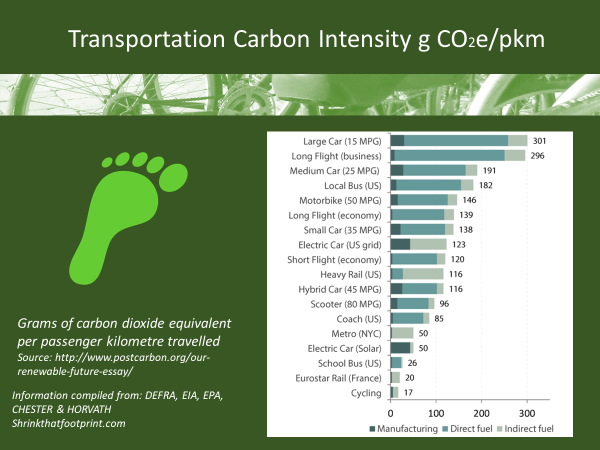
Carbon emissions are a waste by-product from our production and use of energy. We can lower emissions either by using less energy or by using energy from less wasteful sources. It turns out that one of the most effective things we can do here in Brampton to reduce emissions is to use our cars less and our bodies more.
A 2019 energy audit completed for the city’s Community Energy and Emissions Reduction Plan, found that Brampton’s cars and trucks account for almost 60% of the city’s carbon emissions. And a 2016 transportation survey found that, of the 2.3M transportation trips taken in Peel Region by car each day, the median distance is just 6.3 km. That’s an hour’s walk but less than a 20 minute bike ride.
The human body uses energy very efficiently to move itself, especially when travelling by bicycle. The calories contained within a glass of orange juice will carry a cyclist about 5km. That same amount of energy derived from gasoline burned in a car’s engine, typically won’t carry the driver to the end of their driveway.
Creating a cycling culture Katie Whittmann (2015)
Adding costs to the equation makes the case for travelling by bicycle even more compelling. Brampton drivers spend just under $1B per year on gasoline and diesel fuel. That’s on top of the costs for, licensing, road construction and maintenance as well as the vehicle capital and repairs. Overall, a typical motorized vehicle costs more than $6,000/year to own and operate, whereas the average cost of ownership for a bicycle is less than $100 annually.
Barriers to cycling
Access to a bicycle, perceived distance, perceived comfort, lack of skill or concerns about theft, weather and arriving sweaty to the destination are among the many reasons cited for why more people don’t use a bicycle for transportation. A barrier not often discussed, however, is a lack of cycling culture.
Cycling for transportation is considered the norm in many parts of the world where conditions are similar to those here at home. But, in many North American cities, cycling behaviour has been discouraged to the point where a person who uses a bicycle for anything other than recreation is considered second-class or more than a bit odd. Eleanor McMahon, a past Ontario cabinet minister, past Board Chair of Share the Road Cycling Coalition, and the current President and CEO of the TransCanada Trails Association, once said that, “cycling is known as a rich man’s sport, and a poor man’s second choice.”
Fortunately that perception in Ontario and specifically in Brampton is beginning to change. There is no question that cycling popularity is on the rise, especially since the pandemic began encouraging more outdoor activities. Bike retailers have had a hard time keeping up with demand and long wait times for new bicycles have only recently begun to ease.
The city of Brampton responded in 2020 initiating a “Streets for People” campaign that is building bicycle infrastructure as part of an Active Transportation Master Plan. Last year 15km of linear bicycle infrastructure was added including, multi-use paths, urban shoulders and on-street bike lanes. This year city plans call for an additional 31.5km that will flesh out a significant portion of the city-wide cycling network.
Safe infrastructure, is only one of the required elements leading to the cultural shift necessary to get folks out of their cars and onto their bikes. Education and encouragement are two other important factors. That’s where BikeBrampton and the Community Cycling Program comes in.
BikeBrampton is a volunteer group advocating for better and safer active transportation choices in Brampton and Peel Region. As the name implies active transportation is the term used to describe destination type trips that are mostly or entirely human powered including, cycling, walking, skateboarding, etc. But BikeBrampton also partners with PCHS (Punjabi Community Health Service) to deliver the Community Cycling Program (CCP) on behalf of Peel Region.
The purpose of the CCP is to increase cycling mode share by creating a cycling community and normalizing cycling as a legitimate form of transportation. The program increases access to a working bicycle through a bike lending library and by teaching basic bike maintenance skills. It also helps build familiarity, comfort and confidence for riding on existing infrastructure by teaming new and experienced riders as well as through skills training programs and group rides.
One of the more popular aspects of the program is the series of ‘BikeWrx’ pop up events at different sites in both Brampton and Caledon throughout the spring, summer and fall.
Last year’s pop ups proved very popular. According to Sonia Maset, the Brampton and Caledon Bike Hub Program Manager working for PCHS, “Our goal at the beginning of the summer of 2021 was to provide 100 hours of service to 2,000 residents between July and October at 13 different locations, 10 in Brampton and 3 Caledon. In four months, we delivered 120 hours to 2,348 residents over 46 events spanning 17 locations in the two municipalities.”
Services at these events included free bike bell and light installation (courtesy of the Region of Peel), free bike inspections, basic repairs, bike and helmet fittings, route planning, trail etiquette, group rides, obstacle courses, and one-on-one rider education.
2021 Professors Lake Pop-up
The BikeBrampton Bike Hub team is preparing once again for a full slate of outdoor events for this year in both Brampton and Caledon. Bring your bike for a free inspection and minor tune-up. Learn about route planning and bike safety. Get a free bell or bike light while supplies last. Check out the schedule on BikeBrampton.ca. Sign up to the BikeBrampton News to stay up to date on the latest event information including Bike the Creek, Brampton’s signature cycling event.
Urban Forest Management Plan Art Contest – Hirnakshi Joshi, second place winner
The City of Brampton is looking for citizen feedback on its urban forest master plan. The urban forest encompasses all the trees on both public and private lands, including parks, valleylands, and woodlots. It also includes street trees, trees in parking lots, trees on institutional/employment lands and trees on residential property. Residents and stakeholders are being asked to complete a survey available until April 1, 2022.
Trees are a very important part of the city-scape. According to the Government of Canada, “Urban Forests increase our quality of life by promoting mental well-being and encouraging physical activity.” Trees, produce oxygen, filter out air and soil contaminants, support biodiversity, reduce heat loss in the winter and cool temperatures in the summer. Their shade and majesty beautifies neighbourhoods and increases property values. As many tree species can live for hundreds of years, they connect us to our past and help build our sense of community.
For Brampton, trees are critical to the city’s 2040 Vision and the achievement of the Community Energy and Emissions Reduction Plan, (CEERP). Brampton’s trees absorb over 7,700 tonnes of carbon each year which is like taking more than 1,500 cars off Brampton’s roads. Large trees store 75 times as much carbon as smaller trees so the maturity of the forest is also an important factor.
The presence of trees also helps reduce Brampton’s energy requirements by slowing the rate of heat absorption in the hard surfaces of nearby roads and buildings. Urban locations with lots of tree cover can be as much as 10-12 degrees cooler than those with lower amounts of natural vegetation.
Brampton boasts an inventory of 3.6 million trees with an estimated economic value of $780 million. Yet, despite its reputation as a green city, Brampton’s urban forest falls short in several key areas including, canopy coverage, species diversity, and forest maturity. The tree canopy covers only about 18% of the city’s total land mass. This compares to a 25% average cover for other selected communities in the Greater Toronto and Hamilton Area (GTHA). Three tree species, maple, ash and, spruce account for almost half of the total cover. And Brampton’s forests are dominated by smaller younger trees.
These short-comings make the forest vulnerable to climate change risks. Invasive insects such as the emerald ash borer have all but wiped out the city’s stands of large ash trees. The 2013 ice storm killed more than 30,000 trees, with larger mature trees experiencing the most damage. Mature trees are particularly important in terms of the eco-system services they provide. They store 75 times more carbon than small trees and filter out approximately 10 times the amount of pollution from the air. Larger trees also provide more shade and wildlife habitat.
Fewer than half of Brampton’s trees are considered to be in good or excellent condition. The Urban Forest Management Plan’s purpose therefore is to outline a vision for the future of Brampton’s urban forest, define the targets necessary to achieve that vision and then implement a process to monitor progress towards those targets. Click here to see a draft of the city’s urban forest management plan.
The Nurturing Neighbourhoods program provides residents the opportunity to play an active role in shaping the future of their neighbourhood!
Complete the Nurturing Neighbourhoods survey and participate in the online mapping tool – this will allow us to capture comments from you; telling us what you love about your neighbourhood, what you wish was there, and where we could do better.
The survey is offered in multiple languages including Gujarati. Simply select your language at the top of the survey screen. Participants completing the survey by January 30, 2022, will be entered into a draw for a chance to win 1 of 10 prizes.
David Laing as Co-Chair of the Brampton Environment Advisory Committee delegated to Committee of Council on Wednesday January 19th. See video of the delegation and subsequent discussion starting at 1:01:38 . The outcome was that Council referred the matter and BEAC motion to staff to ask for a report back. See below for further information and history on this issue.
What is an Ministerial Zoning Order (MZO)?
A Ministerial Zoning Order, is an extremely powerful but blunt tool that purportedly helps cut red tape for much needed development proposals and brings them swiftly to the shovel ready stage. In doing so, however, it curtails much of the existing planning process, particularly for environmental protections, it takes away the right of appeal, and eliminates public consultation. It also places much of the decision-making in the office of the Minister of Municipal Affairs and Housing, thus limiting involvement of City and Regional staff as well as the technical experts from the Conservation Authorities.
Historically MZOs have been used only in emergency situations such as the replacement for the one shopping mall in Elliot Lake after the roof collapsed on the existing building a few years ago. The use of MZOs has skyrocketed in the past few years under the current Provincial Government.
The Ministry justifies the use of MZOs, pointing primarily to the need for more affordable housing, and indicating that it is the municipal government’s responsibility for doing due diligence and receiving public feedback prior to an application being sent to the Minister’s Office.
The City of Brampton’s recently sent seven MZO applications to the Minister for approval with little or no public engagement. Some of these applications have little or nothing to do with affordable housing. And a review of some of the applications raises questions about the level of due diligence undertaken by Council and staff prior to making these applications.
Ultimately it is the citizens of this City who must hold our elected representatives to account. Up to now this Council has demonstrated a pretty good track record of savvy development process and environmental stewardship. Which makes these actions by Council, seemingly out of character and particularly puzzling.
The issue of MZOs was raised at the BEAC meeting December 7th. The following motion was received by BEAC members:
Whereas the Auditor General of Ontario has reported that actions of the Provincial Government indicate a bias prioritizing land development at the expense of environmental protections including species at risk and climate change mitigation,[1]
Whereas the Auditor General has reported, and the Ontario District Court has ruled that the Provincial Government has demonstrated an unlawful disregard for public consultation on environmentally significant decisions[2],
Whereas a spokesperson for the Minister of Municipal Affairs and Housing has stated, “it is our expectation that municipalities have done their due diligence and have conducted proper consultation in their communities before any request for an MZO comes to the Minister for consideration”,[3]
Whereas City of Brampton Council endorsed the Brampton 2040 Vision document in May of 2018 and in January 2020, approved an extensive community engagement strategy to assist in building the 2040 Plan,[4]
Whereas Brampton City Council has passed motions of support for submissions of seven Ministerial Zoning Orders (MZOs) to the Minister of Municipal Affairs and Housing without first providing the substantive opportunity for public consultation[5][6],
Whereas it is the understanding of the Brampton Environment Advisory Committee (BEAC) that, if these MZOs are approved by the Minister, it effectively removes environmental protections related to the affected land, some of which contain substantial natural capital, environmentally sensitive areas, habitat for endangered species, and flood management issues,
Whereas In 2018 City of Brampton Council created the Brampton Environment Advisory Committee with the purpose to, “engage the community to advance the goals and actions of the City’s Grow Green Environmental Master Plan as well as to advise City Council on environmental planning policy and sustainability matters to promote the protection, enhancement, and management of the City’s natural and built environment”,[7]
Therefore, be it resolved that the Brampton Environment Advisory Committee recommends either:
City Council discontinues supporting the use of Ministerial Zoning Orders as a planning tool until the impact of these orders is better understood in relation to environmental protection and the ability of the City to fulfill the 2040 Vision and meet its carbon reduction targets or;
In the event City Council decides to continue using MZOs as a planning option then BEAC recommends the City create a procedural bylaw for MZOs mandating the preparation of a staff report accompanying each MZO request, including an analysis of servicing costs, an environment impact assessment of the proposal, as well as two public meetings, all to be completed before council votes on whether to send the MZO to the province or not.
David Laing, as co-chair of BEAC, will be delegating to Committee of Council on January 19th, to ask Committee to endorse this motion and take immediate action. The public can watch a livestream of the Committee meeting at https://www.brampton.ca/en/city-hall/meetings-agendas/Pages/Welcome.aspx
The Red Mvmnt is a youth-led nonprofit focused on advancing sustainable menstrual equity with a special focus on reusable period products that eliminate plastic waste.
The next meeting of the Brampton Environmental Alliance will be held virtually on Wednesday December 8th. Informal networking at 6:15pm. The meeting starts at 6:30pm sharp! Click the Register button for your free ticket.
Presentations
Dianne Saxe
Keynote presentation by Dr. Dianne Saxe. Dianne Saxe is one of Canada’s most respected environmental lawyers and was the independent Environmental Commissioner of Ontario, until the Conservative Government rolled that position under the Office of the Auditor General in 2019. Dianne is running as a member of Provincial Parliament candidate for the Green Party of Ontario (University Rosedale riding) in next year’s Provincial election. Dianne is an articulate defender of the environment and a champion of the new green economy. The BEA is thrilled Dianne has agreed to share her passion and environmental knowledge with BEA meeting participants.
Spotlight presentation by Tooba Shakeel. Tooba is a Senior Coordinator of Sustainable Neighbourhoods Program (SNAP) at Credit Valley Conservation (CVC). She is an ISA Certified Arborist, an EcoDistrict Accredited Professional and a Board member of LEAF (Local Enhancement & Appreciation of Forests) a Toronto-based not-for-profit group dedicated to urban forest protection. Thanks to Tooba for agreeing to share information about CVC programs in Brampton including the Fletcher’s Creek SNAP!
Events This group coordinates events for members and assists with events for residents – BEA Collaboration event, Brampton Earth Day event
Education and Resources This group arranges talks on environmental topics, using the One Planet principles of focus: Land and Nature, Culture and Community, Travel and Transport as they relate to Brampton. The group also helps connect members to needed resources and expertise on financing and various environmental topics
Advocacy This group helps coordinate and amplify community advocacy campaigns and environmental initiatives under the three One Planet principles above.
The City of Brampton has declared September to be Tree Month! The City and its partners are hosting events and initiatives, including a tree giveaway, as part of the celebration. Registration begins September 10th. For more information visit,