
Your BEA team is taking advantage of April being Earth Month to participate in various activities to promote environmental awareness. Check out the sections below including: Parent Teacher Night at Harold M. Brathwaite Secondary School,
Sustainable Procurement Workshop at the Rose Theatre,
Reconnect Brampton’s Sip & Stroll Nature Walk in Downtown Brampton,
Earth Day Event at McCandless Park,
CVC Fletchers Creek SNAP Workshop at Brampton City Hall
Parent Teacher Night at Harold M. Brathwaite Secondary School
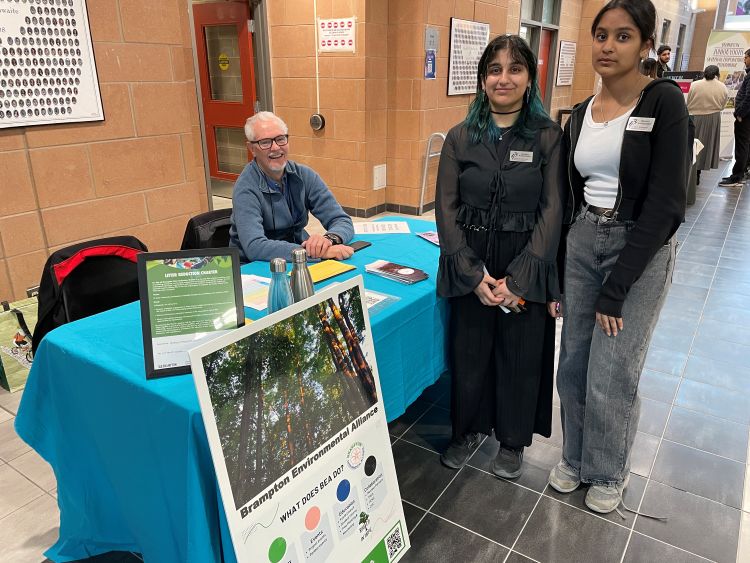
This past Wednesday April 9th, Dayle and I participated in the parent teacher night at Harold M. Brathwaite Secondary School to promote the One Planet Living Challenge, create awareness about the Emerald Energy from Waste expansion project and encourage folks to register for Bike the Creek and other cycling events taking place in the city over the next few months. We had great conversations with both parents and students about the history of Earth Day, the importance of living within planetary limits and the joys of cycling and other forms of sustainable transportation. The student ambassadors were wonderfully supportive, coming to our table and asking how they could help. Report cards must been favourable to the students because everyone seemed to be having a good time!
Sustainable Procurement – Brampton’s Community Benefits Workshop
Friday April 11th, I participated in a Community Benefits Workshop hosted by the City of Brampton at the Rose Theatre. It is a fair question to ask what a Community Benefits Workshop has to do with building a sustainable Brampton. Lot’s it turns out.
The Power of Purchase is something that Dayle and I have been interested in for more than a decade. At the retail level this is called conscious consumerism where the consumer makes buying choices based on their values. When large volumes of consumers consciously choose to buy sustainably sourced products from ethical companies, using fair trade practices it sends a powerful market message that environmental and social responsibility is important.
Companies that ignore this message can see sales and profits negatively impacted. The threat is often enough to change how products are designed, manufactured, distributed and disposed of at the end of their intended life. A good example of this is McDonald’s Restaurant chain that, in 2018, replaced plastic straws with paper due to a customer-led campaign.
Customer-led change, however, is relatively rare because of the challenge involved in building a swell of spontaneous feedback. Sustainable corporate procurement practices, on the other hand, can be an even greater market force for good because smaller numbers of buyers are involved in very large purchase decisions both in number and scale of transactions. Corporate procurement, therefore, when driven by a “community benefit strategy”, can be a tool that unlocks transformative local economic opportunities, empowers workers, and leverages social value in creating conditions that will encourage and drive a circular economy.
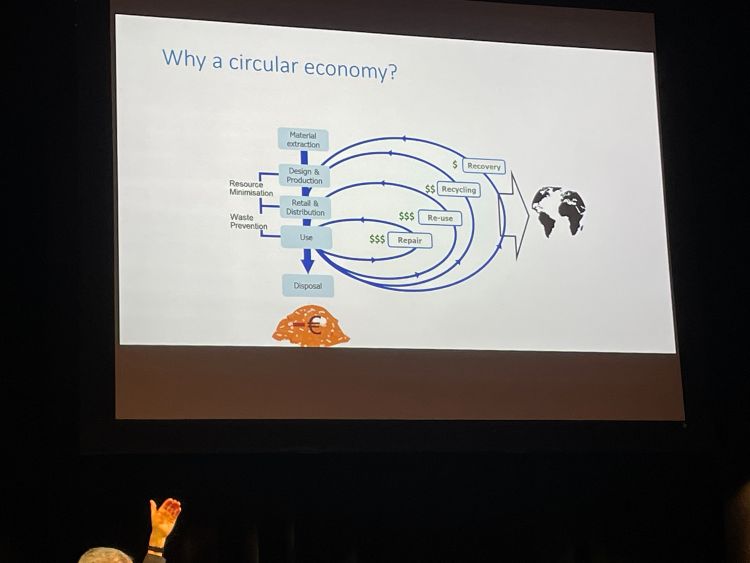
The circular economy is a model of production and consumption that extends the life cycle of both raw materials and products. It does this through mechanisms of sharing, repairing, repurposing, refurbishing, recovery, and recycling. Each time material goes through one of these cycles, rather than being disposed of, it continues adding value to the global economy through job creation and product utility. The objective is to have these products and materials continue providing economic value in perpetuity, generating more wealth and prosperity while limiting the requirement to extract “virgin” material from an earth with rapidly depleting resources.
The City of Brampton is developing a Sustainable Procurement Strategy to leverage large infrastructure projects to improve the quality of life for Brampton residents by requiring community benefits from suppliers while stimulating the local circular economy. This has started with the implementation of a supplier diversity program and a fair wage policy. The current step involves adding a community benefits policy which involves buy-in from potential city partners and suppliers. Hence a reason for last week’s workshop.
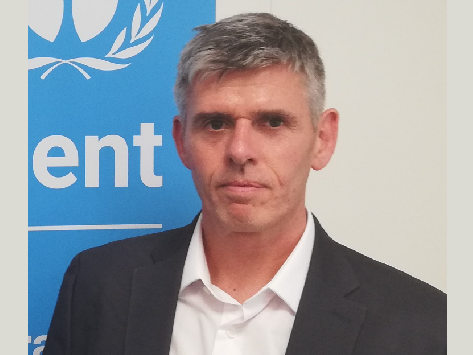
The workshop was led by Dr. Mervyn Jones a globally recognized procurement expert with a PhD in Climate Change and over 25 years of sustainability experience. Dr. Jones used his home country of Wales as an example of a community benefits procurement strategy.
In 2015 Wales passed the. “Well-being of Future Generations Act”, which uses the indigenous “seven generation” approach to decision-making, that takes current and future impacts into account.
The Act requires municipalities in the country to work to achieve seven well-being goals, that aim to balance, social, environmental and economic objectives. It also defines five ways of working including, balancing short and long-term needs, integrating objectives of all public bodies, involving people that reflect community diversity, be open to collaboration and, acting to prevent problems from occurring or worsening.
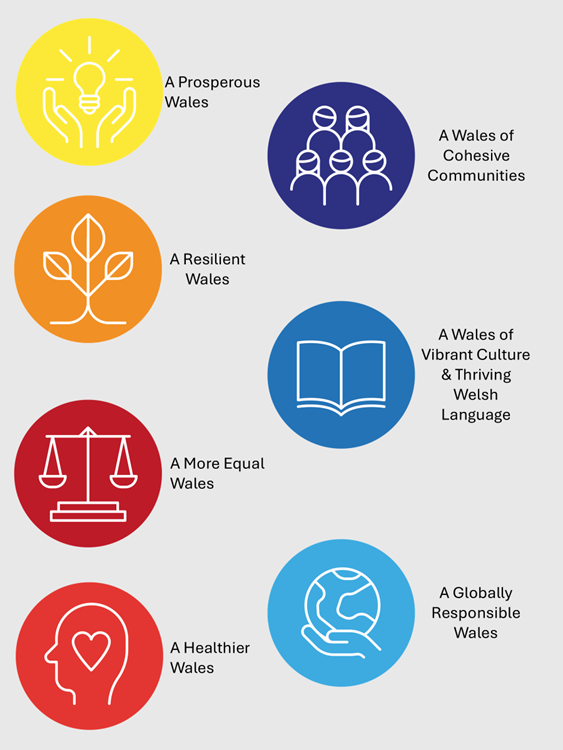
Finally, the Act outlines 50 key performance indicators that are used to measure progress while ministers are required to set milestones in relation to those national indicators.
Brampton’s Community Benefits Policy is a transformative initiative, harnessing the City’s purchasing influence to create economic opportunities, promote inclusive training programs, and expand employment opportunities for residents, especially those from equity-deserving groups. It is paving the way for lasting change and the enrichment of the economic, social and environmental fabric of our community.
Reconnect Brampton’s “Sip & Stroll”
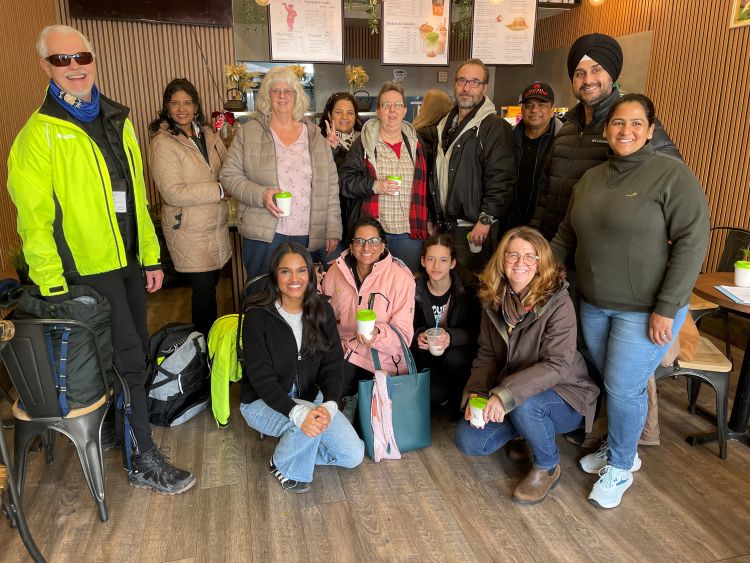
On Saturday April 12th, Dayle and I led a “Sip & Stroll” walking tour organized by Halley Patel the Regional Coordinator at Reconnect Brampton. About 15 participants met at Ryan’s Chai Cafe and enjoyed a complimentary hot brew before starting the tour.
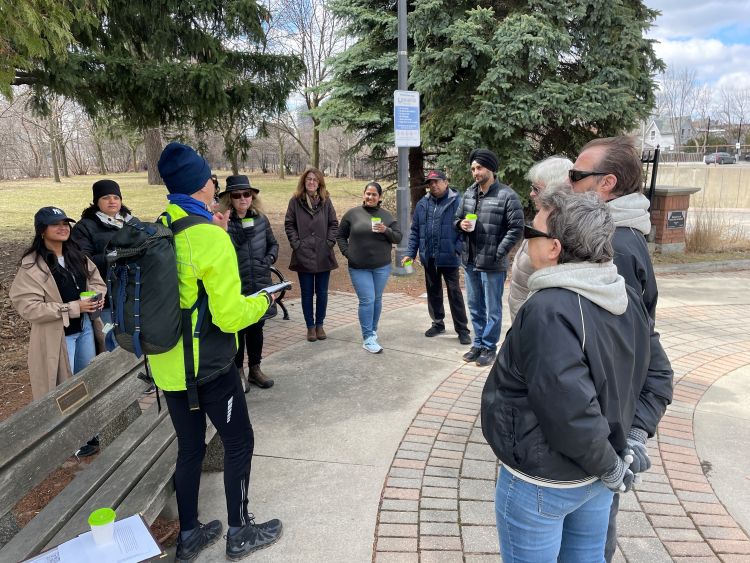
Created by Environmental Defence, the Reconnection Project is designed to connect people with nature and community by making it easy to, know about, and participate in, local events that focus on the outdoors.
The tour used seven stops to illustrate how climate change is affecting Brampton’s downtown area and to discuss the City’s plans for managing flooding, creating new development opportunities and encouraging active and sustainable transportation. The tour also highlighted a bit of Brampton heritage and how residents can be more involved in the City’s planning process.
Wards 3&4 Earth Day Event at McCandless Park

Sunday April 13th, Dayle and I met up with BEA Board members Yarim and Amisha at Councillor Santos’s Earth Day Event in Andrew McCandless Park. There were several environmental activities to keep participants busy including, a tree-planting hosted by Credit Valley Conservation, and a park clean-up hosted by People Against Littering. There was also information about the City’s Plant-based Treaty initiative, which I’ve written about in a previous post.
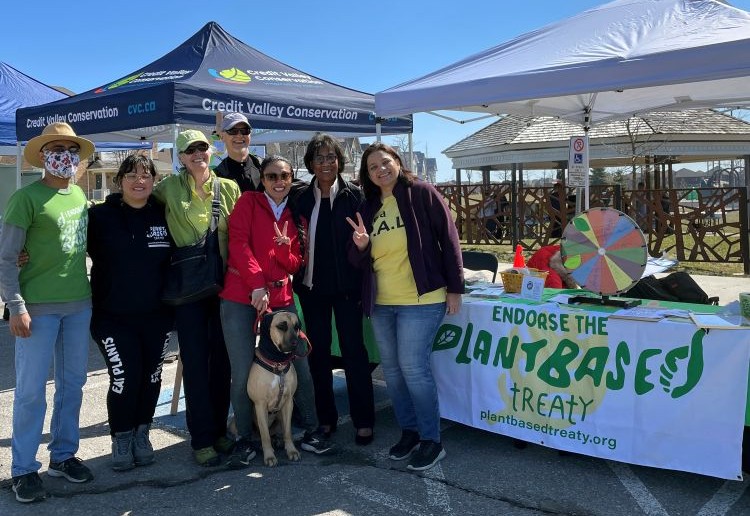
While it was nice being part of this important environmental day and saying hi to friends and colleagues, one of the reasons Dayle and I wanted to attend this specific event was that we had a significant amount of electronics for recycling. Friends and family had added to the pile over the past several months and the collection included old cathode ray TV sets, rotary dial phones, a Blackberry Pearl phone, (with flip-down real keyboard), a night-side table radio with built in lamp, and a host of computer and stereo sound system equipment.
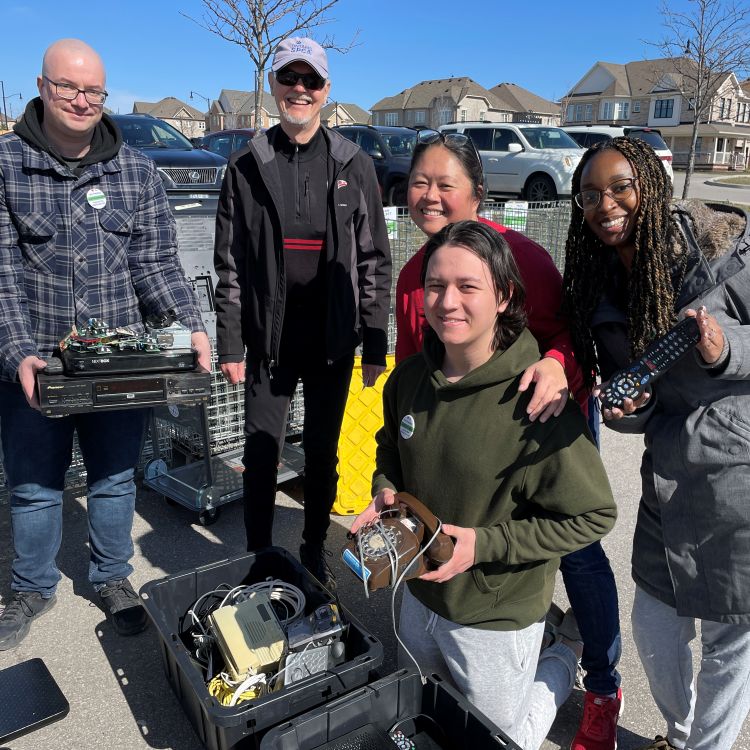
Alison, Rebecca and the other volunteers from the electronics recycling organization “Let’s Get Together” helped unload our van and then weighed and sorted all of the old retired items. LGT is a not-for-profit whose mission is to support the circular economy by repairing old computers and other electronics and then working to ensure that every youth has access to technology and equal opportunity allowing those youth to pursue higher education without barriers and with “purposeful support”. So far LGT has redistributed more than 5,000 computers back to the community, has diverted more than 120,000 pounds of e-waste from landfills, and has provided more than 12,000 digital literacy workshops.
Credit Valley Conservation hosts Fletcher’s Creek SNAP Workshop
On Monday April 14th, I attended a workshop hosted by Credit Valley Conservation Authority (CVC) in support of the Fletchers Creek Sustainable Neighbourhoods Action Program (SNAP). SNAP takes an integrated approach to improve the environment in a chosen neighbourhood, building climate resiliency by greening local infrastructure and encouraging positive behaviour change among the residents through programs, events, and education. The SNAP was initiated by Toronto and Region Conservation Authority (TRCA), Both TRCA and CVC have delivered SNAP projects in Brampton including, County Court Blvd, Bramalea, and Fletchers Creek. Each project is unique and engages the residents in helping define project priorities and actions.
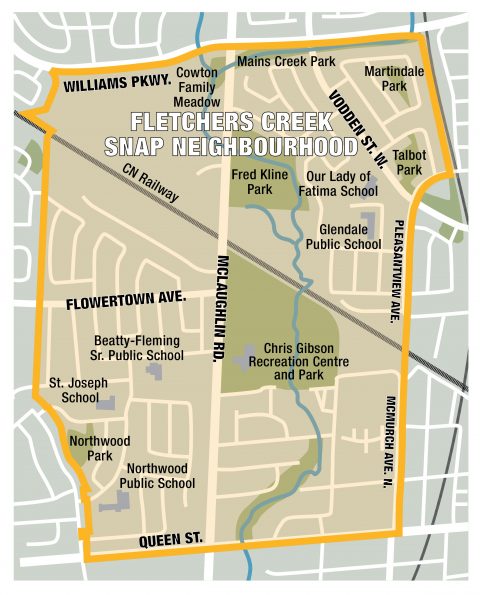
The Fletchers Creek project is focused around 5 themes, Living Parks and Nature, Green Streets, Strong Schools, Resilient Homes and Businesses, and Active People. Within those themes, 27 actions have been completed or are in progress. Highlights over the past 5 years include
- Installation of rain gardens at three schools,
- Delivery of a “Your Green Yard” program,
- Numerous tree and rain barrel giveaways,
- 5,628 trees & shrubs planted,
- 7,717 wildflowers, grasses, and sedges planted,
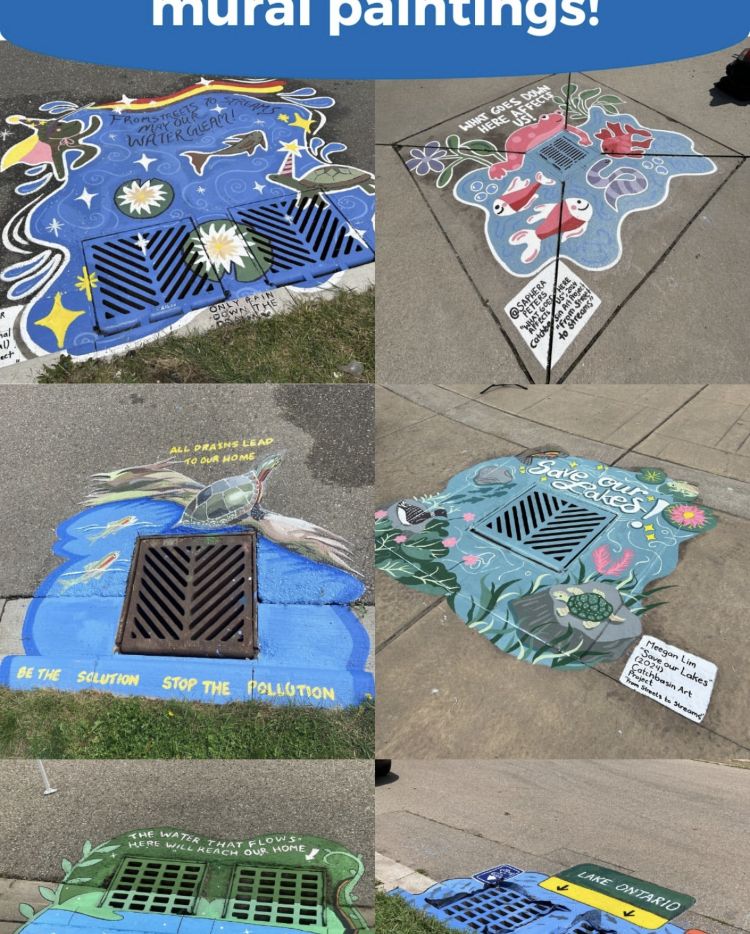
- 11 community projects started including a catchment basin painting project,
- 388 sustainable actions taken at homes
- 345 events hosted, and,
- 7,472 people engaged in the neighbourhood!
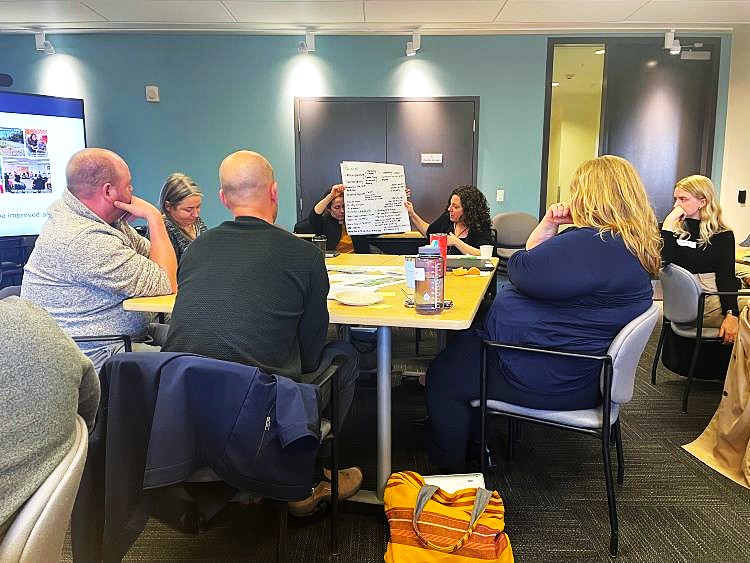
Each table was assigned one of the 5 themes and was asked to reflect on the accomplishments over the past 5 years, and help define the priorities and capacity requirements for how the project should evolve over the next 5 years. It was great to see the level of commitment, passion, competency and experience demonstrated by the workshop participants. I’ll write another blog once the workshop results have been synthesized and shared with the group.