
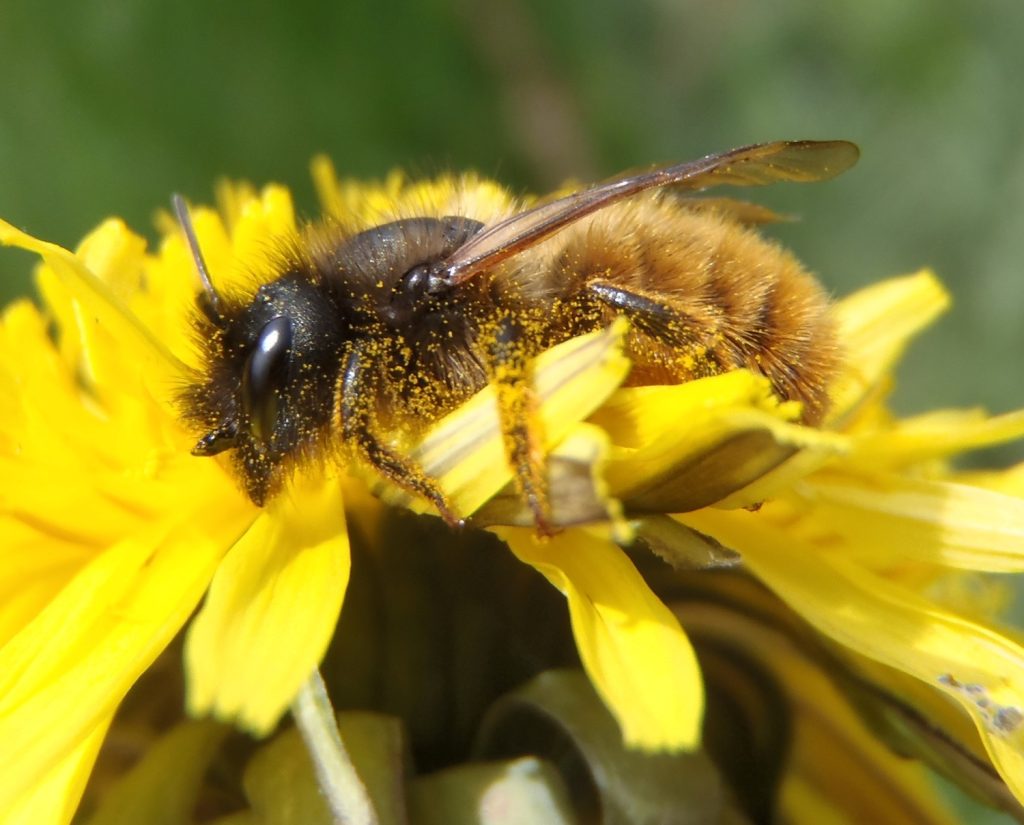
Pollinators are essential to healthy ecosystems, food production, biodiversity, and climate resilience across Ontario. Creating pollinator gardens with native plants and installing bee hotels are simple but powerful ways communities can support declining native bee populations while helping mitigate climate change through healthier urban ecosystems.
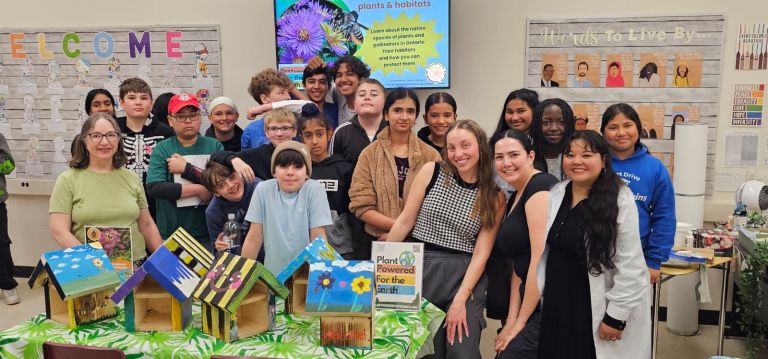
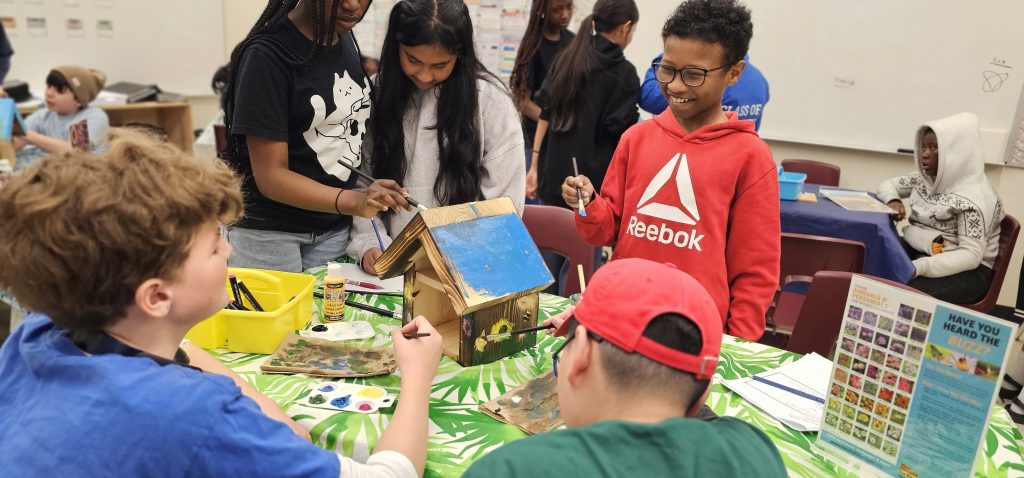
Recently, Brampton Environmental Alliance partnered with Plant Powered for the Earth to bring a Bee Habitat Program called “ Pollinator Habitat Protectors” to W.G. Davis Senior Public School. Students participated in a hands-on seminar and workshop about the importance of native plants and pollinators, and decorated six bee hotels built and provided to the school by both organizations to help enhance the school’s pollinator garden and provide a habitat for solitary bee pollinators.
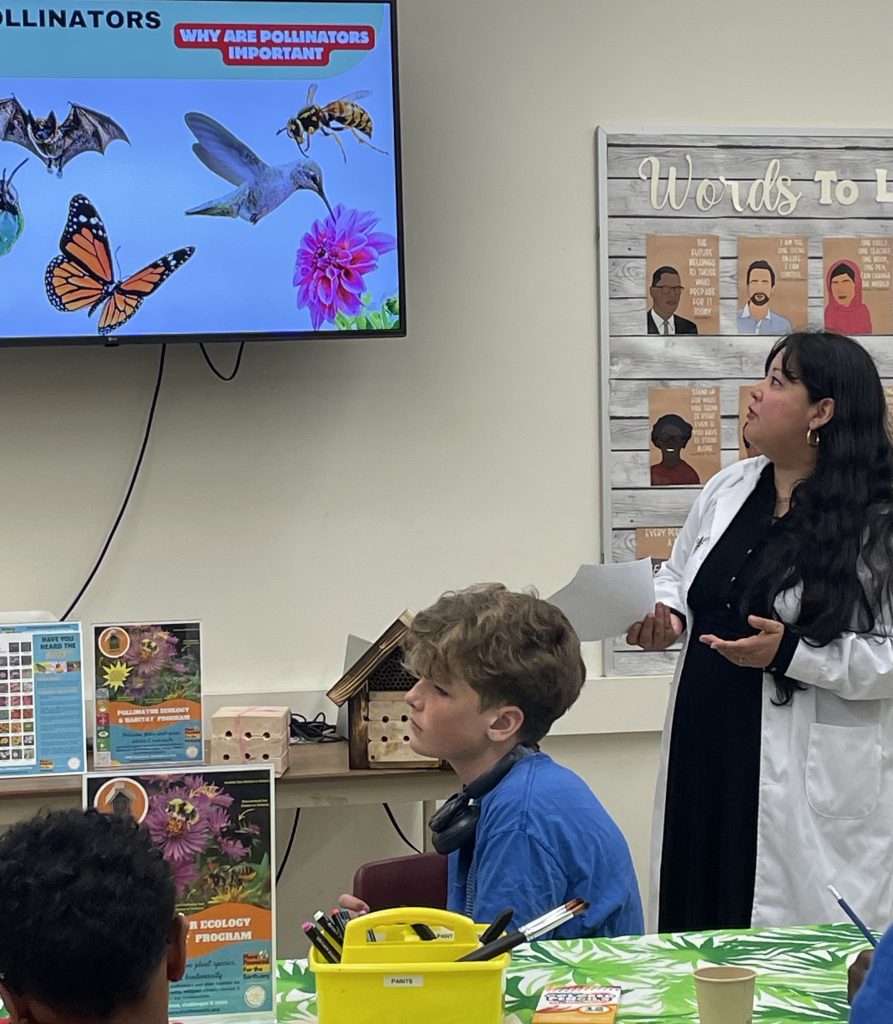
The workshop was facilitated by environmental educator Yarim Hinojosa to the school’s grade 7 students and Eco Club. The goal was to inspire and empower the students by teaching them all about native pollinators and pollinator-loving plants of Ontario, how to protect pollinators and their habitats and the advantages of bee hotels.
The workshop had the indigenous perspective or approach called “two-eyed seeing” (Etuaptmumk) as a guiding principle. Mi’kmaq Elder Albert Marshal originally introduced this approach and it advocates for looking at the world with one eye using the strengths of Indigenous knowledge and ways of knowing, and with the other eye using the strengths of Western knowledge and methods. We used this approach to help the students better understand the importance of native pollinator animals and native plants in Ontario.
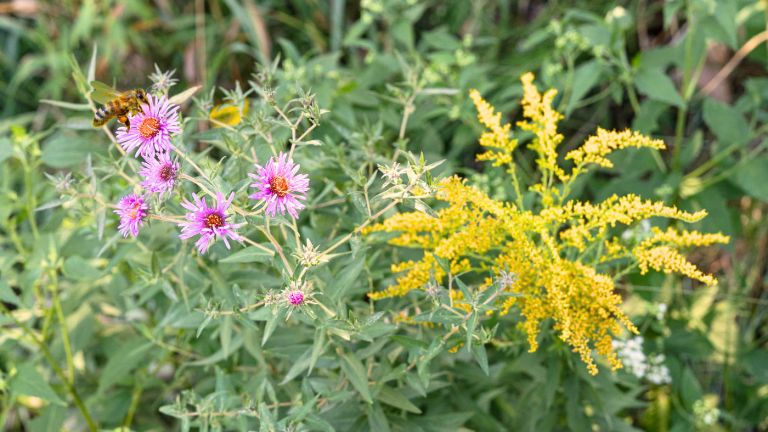
One example that was shared was the indigenous perspective of reciprocity and connection between plants and bees proposed by Robin Wall Kimmerer, who is a plant scientist, poet, member of the Potawatomi Nation, mother, and student of Native American stories and traditions.
In her book Braiding Sweetgrass: Indigenous Wisdom, Scientific Knowledge, and the Teachings of Plants, Robin Wall Kimmerer says “while beauty may be in the eye of the beholder, she says, science also tells us that the two colors of purple asters and yellow goldenrod, having reciprocal colors in human and bee eyes and growing together, attract a greater number of pollinators than either would growing alone, therefore leading to better plant success.”
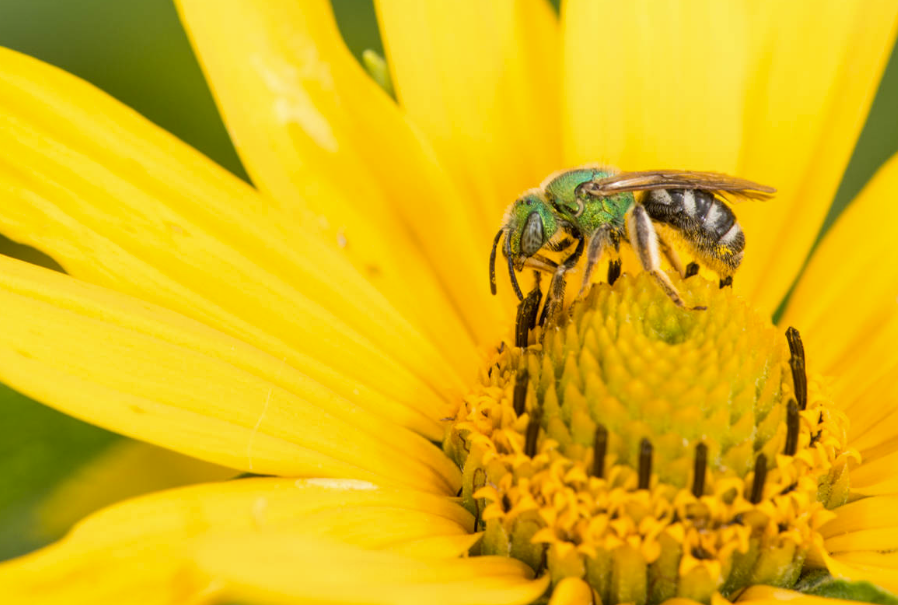
The students learned about botany, biology and ecology, as well as how to identify and grow native plants that attract native bees and butterfly pollinator animals in Ontario. There was a special spotlight on the plants that will be grown in the school’s brand new pollinator garden. These plants include bee-attracting specimens like Smooth Blue Aster, Oxeye ( pictured above with a green female Sweat Bee), Pearly Everlasting, Mountain Mint, Lanceleaf Coreopsis, Blue Lobelia among others.
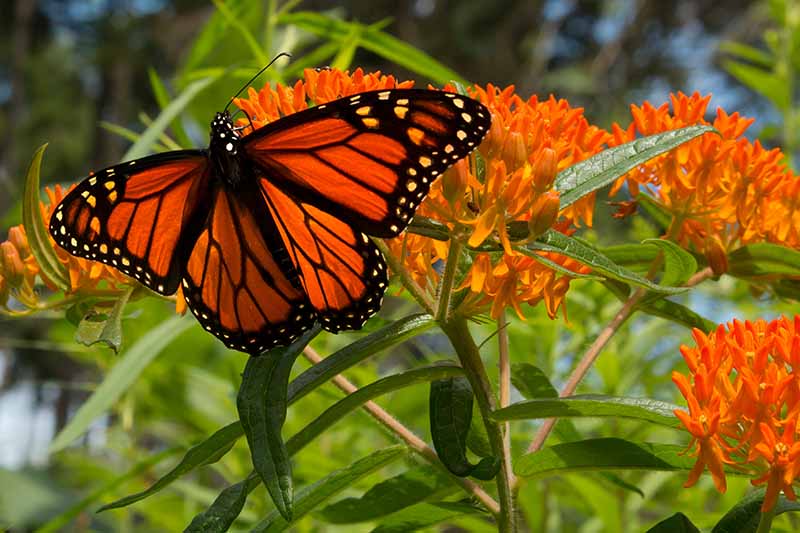
The students also learned about the botany and ecology of butterfly-attracting plants like Wild Columbine, Purple Coneflower, Cardinal Flower, Butterfly Milkweed (Pictured above with a Monarch Butterfly), Hairy Beardtongue, Dense Blazing Star, Dense Blazing Star, Smooth Blue Aster, among others.
Did you know? Milkweeds are larval host plants for monarchs, which are a native species to Ontario. Increased plantings of these wildflowers will help populations of these regal butterflies in their efforts to make their grand migrations, a phenomenon which is in peril.
The students also learned about the challenges that native bee species face in Ontario, such as pesticide use, destruction of habitat and competition with non native species and actionable ways to help.
Did you know? A study by the University of Toronto suggests that non native species, including honey bees, which are an introduced species, are affecting Ontario’s native solitary Mason bee population.
The students were amazed to learn about the ecology of native solitary bee species, which many had never seen or heard about. This is not surprising as most media, illustrations and advertising portray bees mostly as “honey bee-looking”. They quickly became aware of the importance of learning about the various kinds of native bees in Ontario to protect them. Some of these beautiful, solitary species native to Ontario include those in the Osmia genus (Typical Mason Bees / Orchard Bees) and the Megachile genus (Leaf-cutter bees )
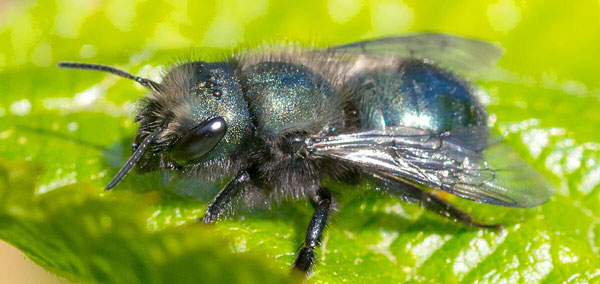
Osmia lignaria (Blue Orchard Mason Bee) – The most well-known native mason bee, metallic blue-black, and a highly efficient early-spring pollinator.
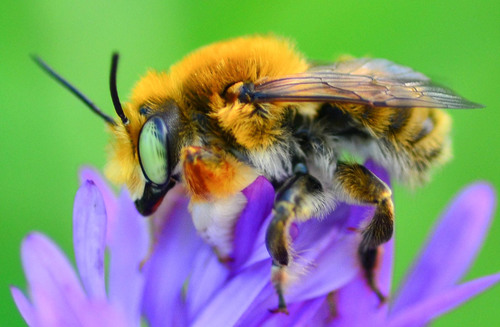
Megachile latimanus: A large, widely distributed, and extremely common leafcutter species.
Native bees face many challenges, but part of the solution, besides awareness and education, is protecting and providing habitat. The ideal habitat is a natural habitat, in urban areas, without pollinator gardens or plants; the students learned that humans can offer shelters or structures like bee hotels.
Everyone in attendance was inspired to plant more native plants in their homes, balconies, and communities that attract pollinators. We also showed them the benefits of providing solitary bees a “bee hotel” as habitat for their pollinator garden, which will provide native solitary bees a home near the school’s pollinator garden.
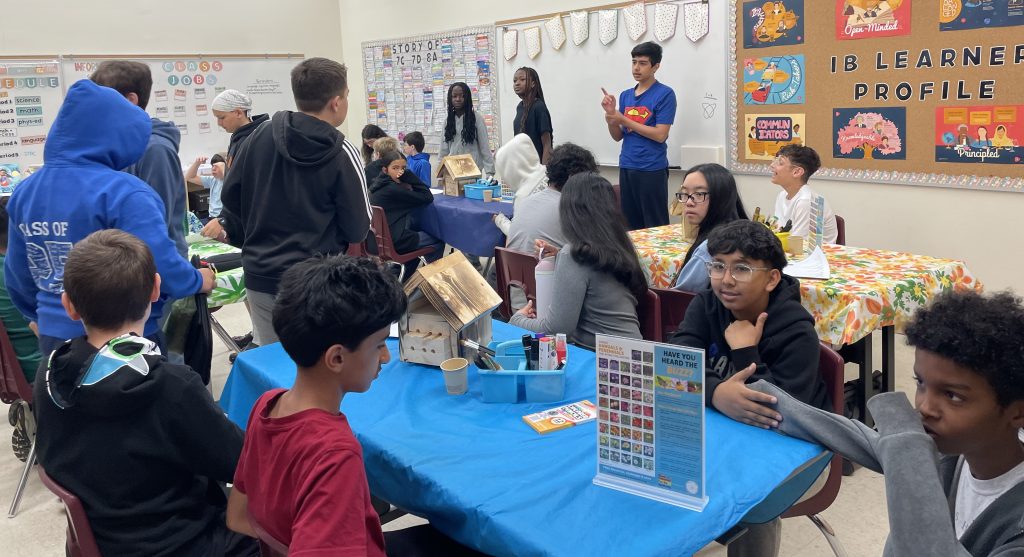
The workshop ended by having the students paint the outside of six bee hotels with colors which bees are attracted the most such as blue and yellow. These bee hotels were designed and built as a collaboration by the BEA and Plant Powered for the Earth, and donated to the school to enhance their pollinator garden.
The students also shared what they learned, and everyone expressed genuine interest, shared responsibility and excitement to help protect pollinators and native plants in their school and monitor the lifecycle of bees visiting their bee hotels.
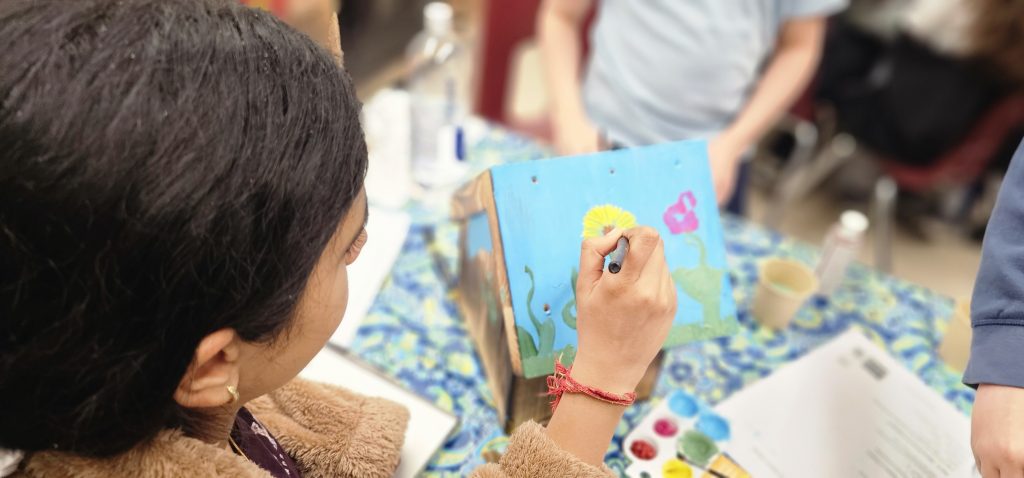
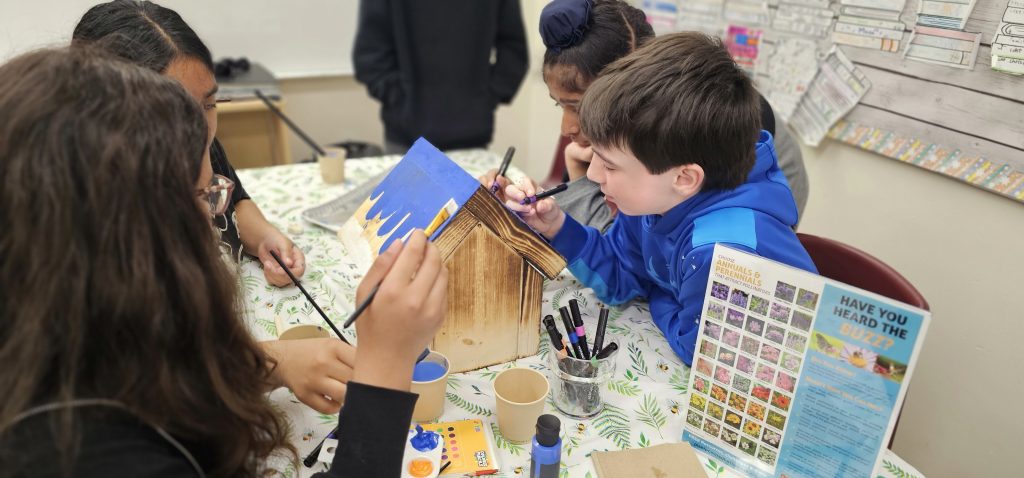
The workshop and program will include ongoing monitoring by the BEA and Plant Powered for the Earth in collaboration with WG Davis SS of the bee hotels and their full lifecycle. The goal is to introduce students to hands-on environmental education and citizen science while helping support native solitary bee populations, encouraging the planting of pollinator gardens for biodiversity, food security and to mitigate the impact of climate change in Brampton.
Programs like this help advance local pollinator habitat goals, encourage the planting of native gardens, strengthen biodiversity, and contribute to climate action by creating greener, more sustainable communities.
If schools, organizations, or community groups are interested in bringing this Bee Habitat Program to their school or institution, please contact us, we would love to collaborate.
info@bramptonea.org
contact@plantpoweredfortheearth.org