I just returned from a 2-week bike and boat tour in the Netherlands. It was a transformative experience, seeing first-hand how a society and economy can be built where the car is not the primary mode of transport, where most energy requirements are met by renewable sources, and where climate action is a visible and normalized part of daily life.
This article is not a travelogue. My friend Lisa does a much better job than I in capturing the history, architecture, and visuals of her travels. Lisa was one of seven companions who went with Dayle and me to this beautiful and culturally rich country. You can see her posts about the trip at Lisastokes.ca.
What I want to focus on in this article is how the Dutch people, have largely left behind the debate about the reality of climate change and are simply getting on with the job of addressing it. Contrast that with Canada where federal and provincial governments, from both sides of the political spectrum, are rapidly rolling back climate policy and environmental regulations.
The first notable difference between Canada and the Netherlands is that climate is tied to economics rather than environment. The Dutch Ministry responsible for meeting carbon reduction targets is the Ministry of Economic Affairs and Climate. There is a recognition that the Dutch economy, as well as its way of life will be severely impacted if emissions reductions specified in the Paris agreement are not met.
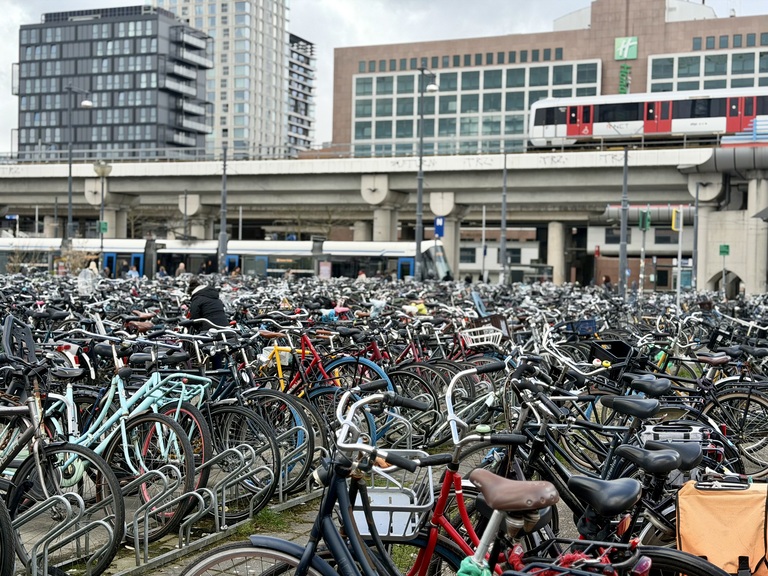
Photo courtesy of Lisa Stokes
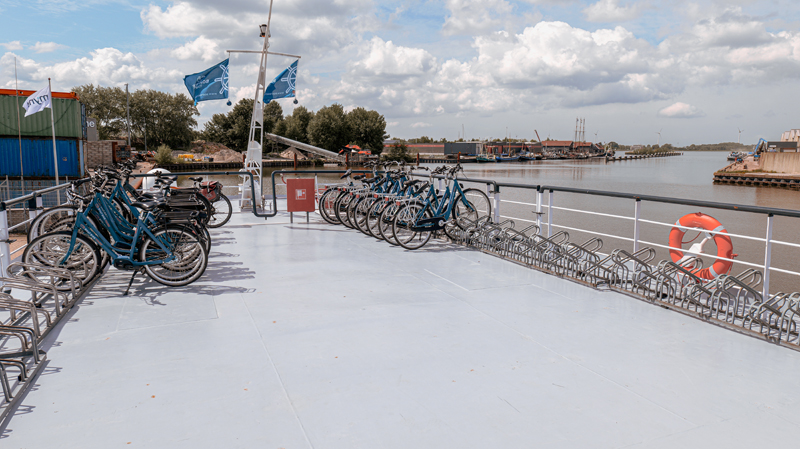
As a tourist, Dutch efforts to reduce carbon emissions are both subtle and obvious. The most obvious is the absence of car culture. The bicycle is the primary mode of travel for short-distance trips throughout the Netherlands. In large cities like Amsterdam bicycles account for almost 1 of every 2 trips taken. Public transit, mostly in the form of trams and trains are used for about 8% of trips. The car still dominates for longer-distance travel on major throughways, although there is a reasonably convenient cycling network connecting towns and cities. But facts and statistics do not do justice to the feeling you get travelling in Holland. The volume of bike traffic is almost overwhelming.
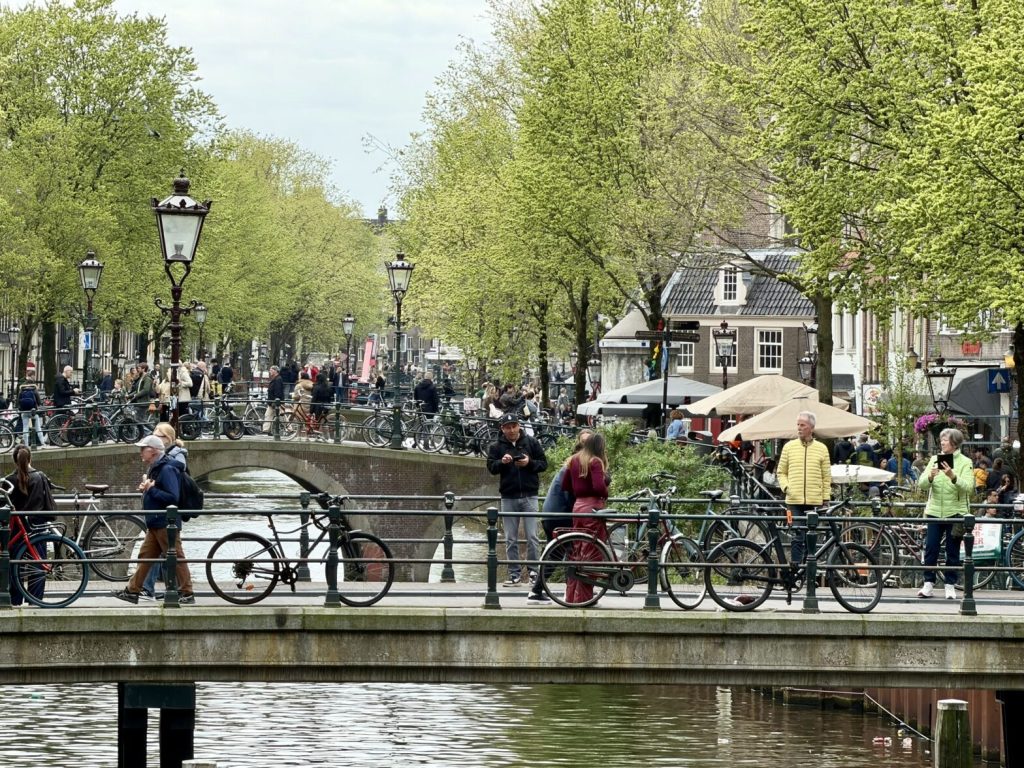
Photo courtesy of Lisa Stokes
The infrastructure is almost always built with the safety and comfort of both cyclists and pedestrians in mind. Within the towns, and on secondary roads, convenience for car drivers is at best a secondary consideration. In Amsterdam, and smaller cities such as Hoorn or Haarlem, separated bike lanes are the norm for any streets that are expected to carry larger volumes of faster moving traffic. Bicycles are not allowed on sidewalks and pedestrians must take the same care in crossing bicycle lanes as they would a lane for cars.
Side streets are often protected by huge bollards that prevent larger vehicles from entering. These bollards lower into the pavement to allow for passage of local, commercial and or safety vehicles and then rise again once the vehicle has passed.
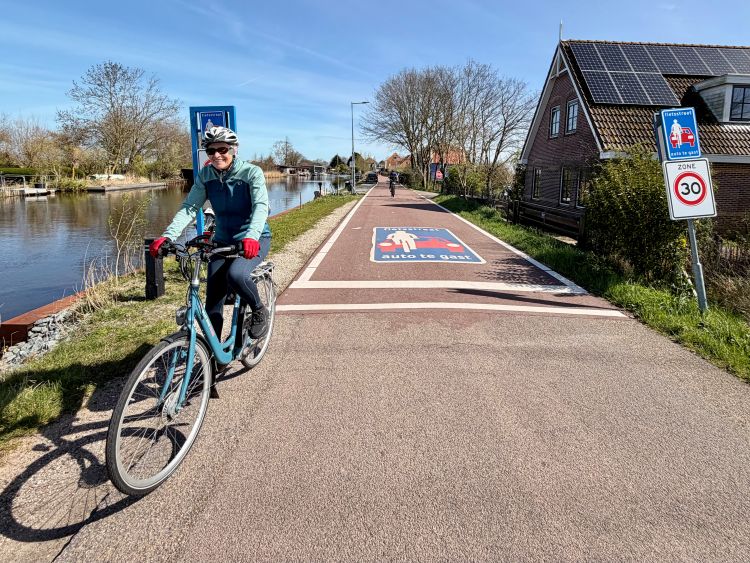
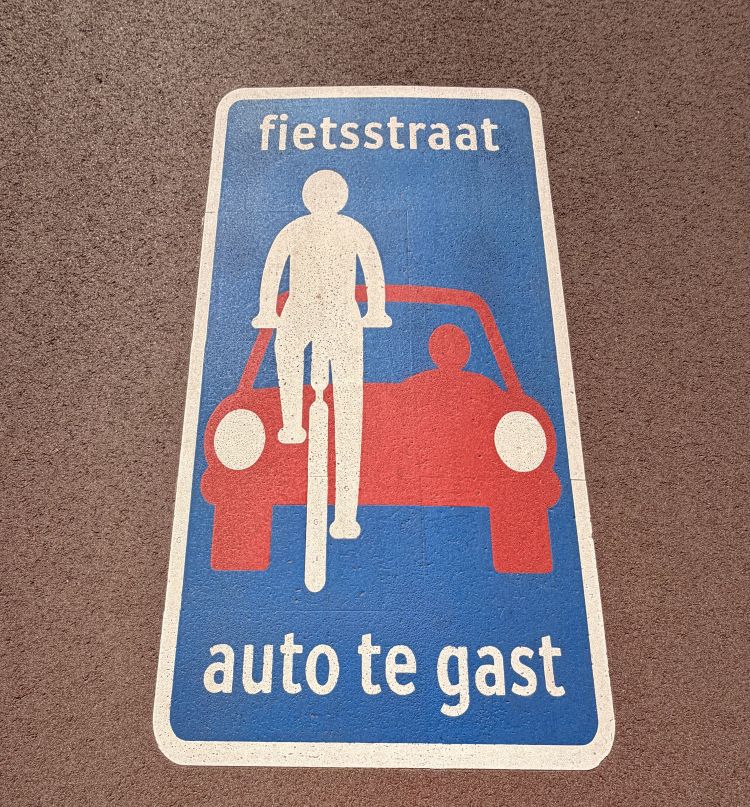
Streets that accommodate all vehicle types are referred to as “woonerf” or living streets. On these streets the cars are considered “guests”, speeds are limited to 30km per hour and cars must yield to cyclists, even if that means travelling at bicycle speed for a kilometre or more.
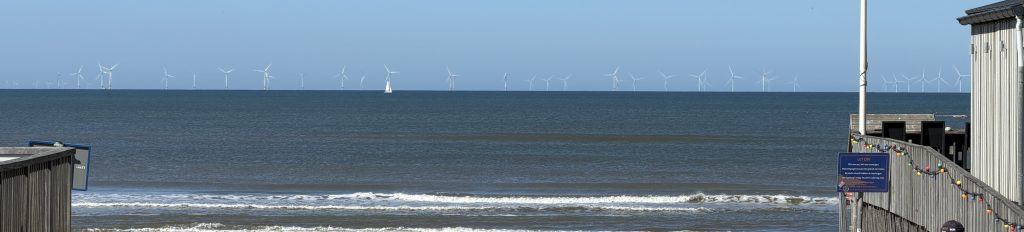
From an energy standpoint, the message is clear that the Netherlands is committed to renewable energy. Many older style windmills are still functioning to help pump water or grind grains.
Newer technology windmills are almost always in view, whether as part of offshore windfarms or dotting the landscape amongst the farm fields and flowers. Renewables, mostly solar and wind, now generate more than 50% of the country’s electricity needs with the target to achieve 75% by 2030.
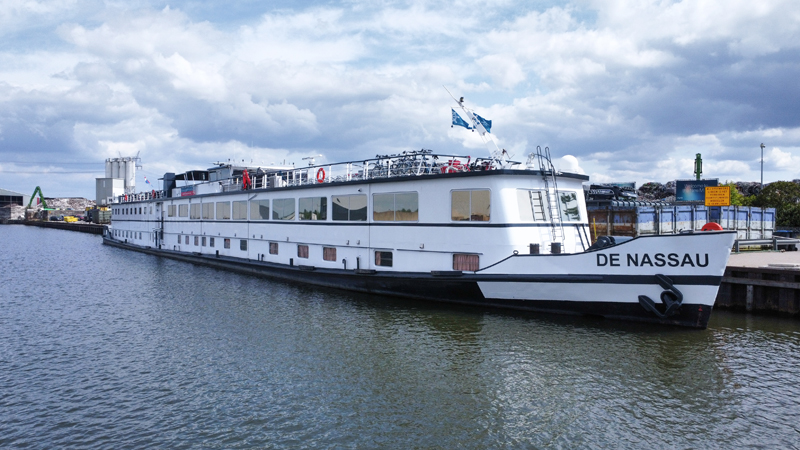
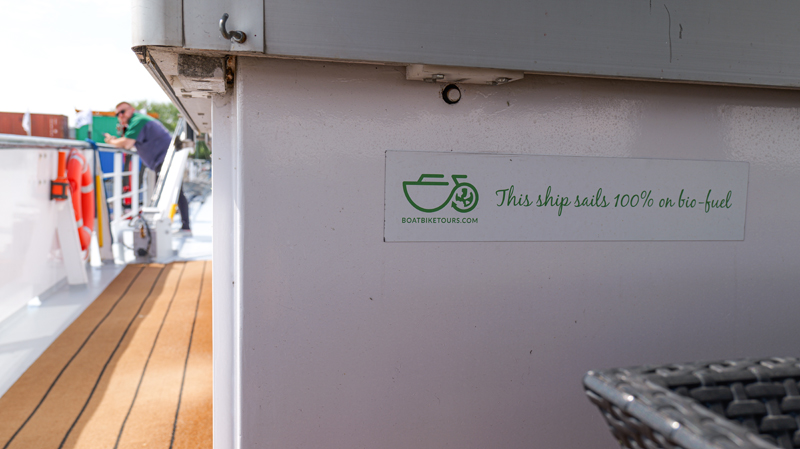
Beyond individual transport and energy were other signs of a collective commitment to reducing carbon emissions. Of course we observed many electric vehicles on the road or plugged into local charging stations. But I wasn’t expecting to see a sign on our boat indicating it used 100% biofuel.
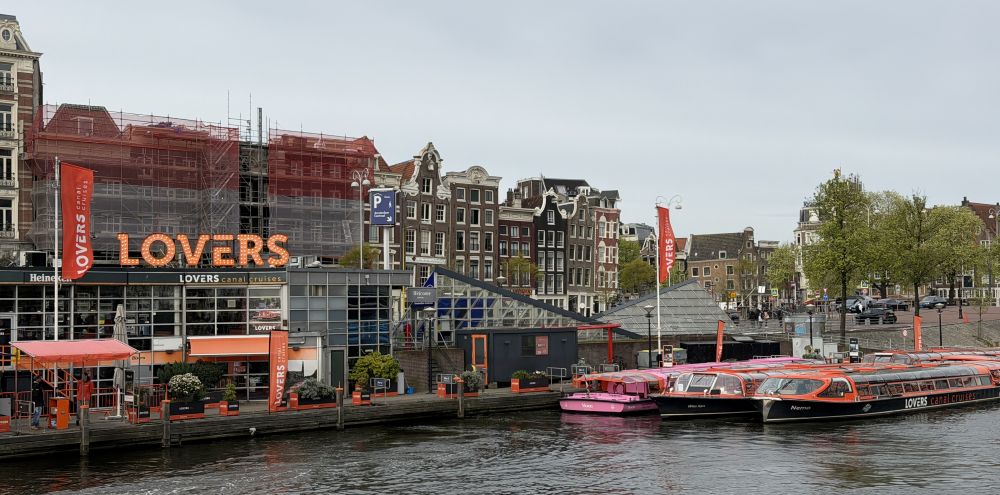
And the motors on the Love boat that we took to tour the canals of Amsterdam were 100% electric!
I also noted a reduced amount of plastic packaging in the Jumbo stores where we bought groceries. Most products are wrapped either in cellophane, paper or cardboard, all biodegradable materials. Public recycling bins are everywhere, and they included separation for organic waste.
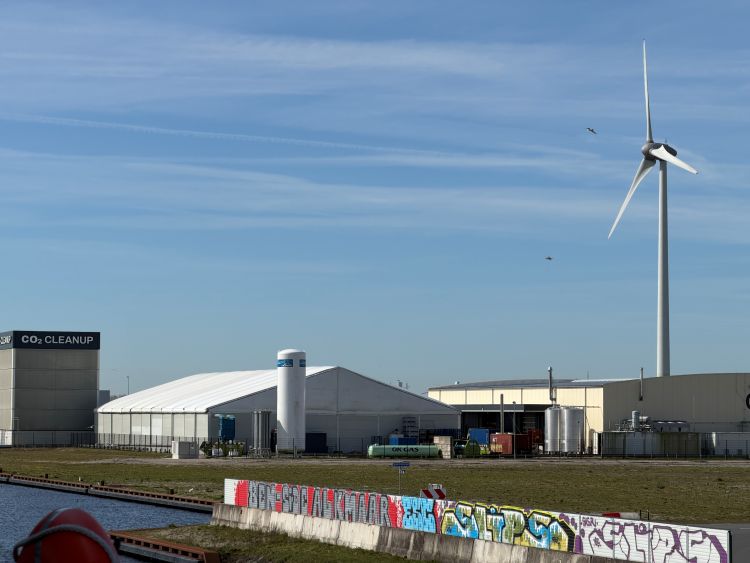
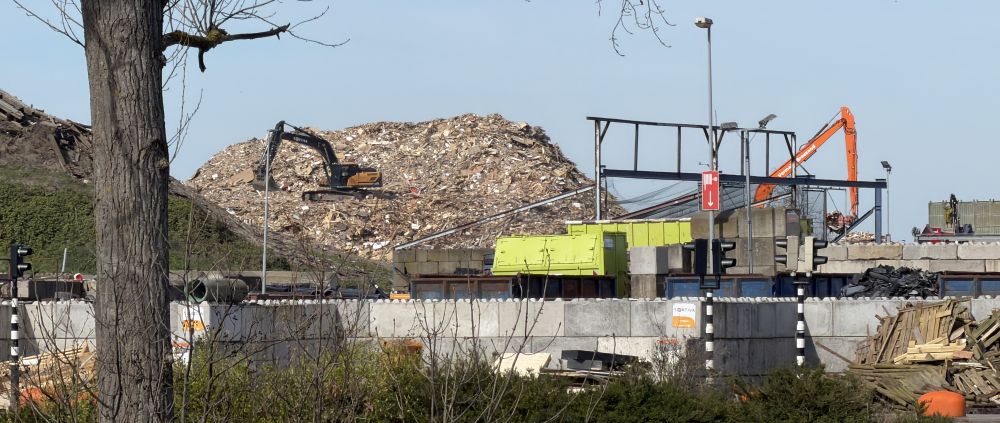
Climate friendly industries were highly visible as we travelled through the countryside. Here are a couple of examples.
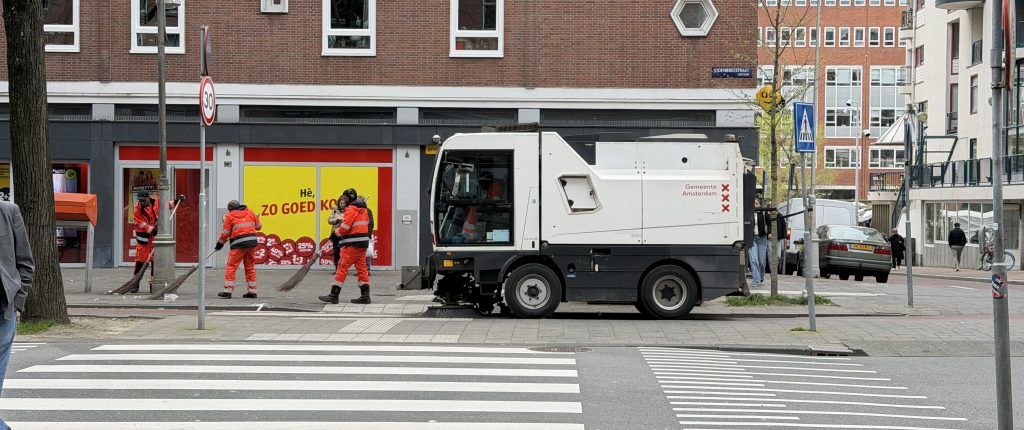
And streets in the Netherlands are cleaner than at home, partly because of the culture, and partly because of the teams of street sweepers which can be regularly seen, especially in Amsterdam’s downtown tourist area.
Perhaps one of the reasons why the Dutch are so eager to embrace actions to address climate change is that the country has a lot to lose if global temperatures surpass the 1.5 degree Celsius temperature change threshold considered safe by the scientific community. Time and place didn’t allow us to see some of the Netherland’s amazing flood management systems but this is another way in which the country is embracing the climate challenge.
More than 30% of the country is below current sea levels requiring an intricate system of polders, (large land areas that have been raised above sea level), dykes, (barriers along the coast to hold the sea off the lower lands), and a series of dams, fixed storm surge barriers and portable flood barriers that self-inflate in the presence of high water levels.
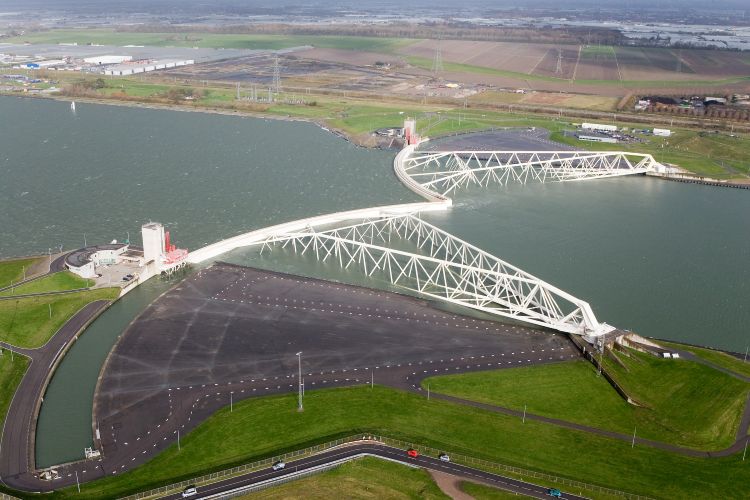
In addition to designing systems that keep water out, they also have infrastructure to strategically let water in to be absorbed into restored marshes and estuaries where it reduces flooding risk while supporting natural ecosystems. See, the YouTube video, How the Dutch Keep the Entire Country from Drowning, for a better understanding of how the Dutch have developed the most sophisticated water defence system in the world.
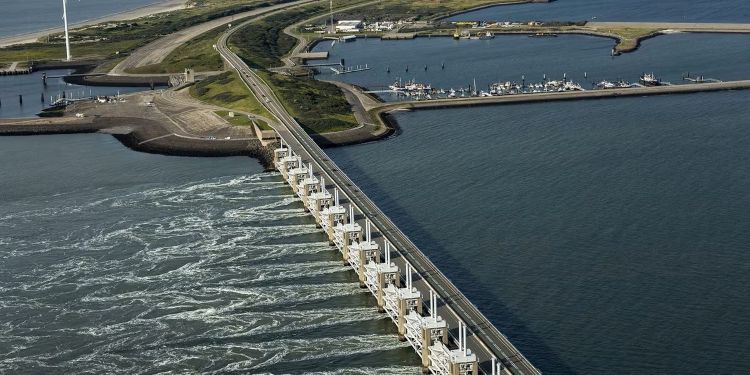
Photo credit: How the Dutch Decided ‘Never Again’: Lessons from the Delta Works”, https://medium.com/@moramezani/how-the-dutch-decided-never-again-lessons-from-the-delta-works-5a10897f9a68
Despite their engineering prowess, the Netherlands still has significant obstacles to overcome to achieve long-term environmental sustainability. Sea levels are rising. The International Panel on Climate Change assumes a maximum rise of 1 metre by the year 2100. But the rate of rise has almost doubled over the last decade to about 4mm each year. This may be due to ocean warming and melting ice in the Arctic, Antarctic and, Greenland that is happening faster than originally assumed. If sea levels rise by 2 metres or more, Netherlands water defence system would need a complete overhaul to prevent catastrophic flooding.
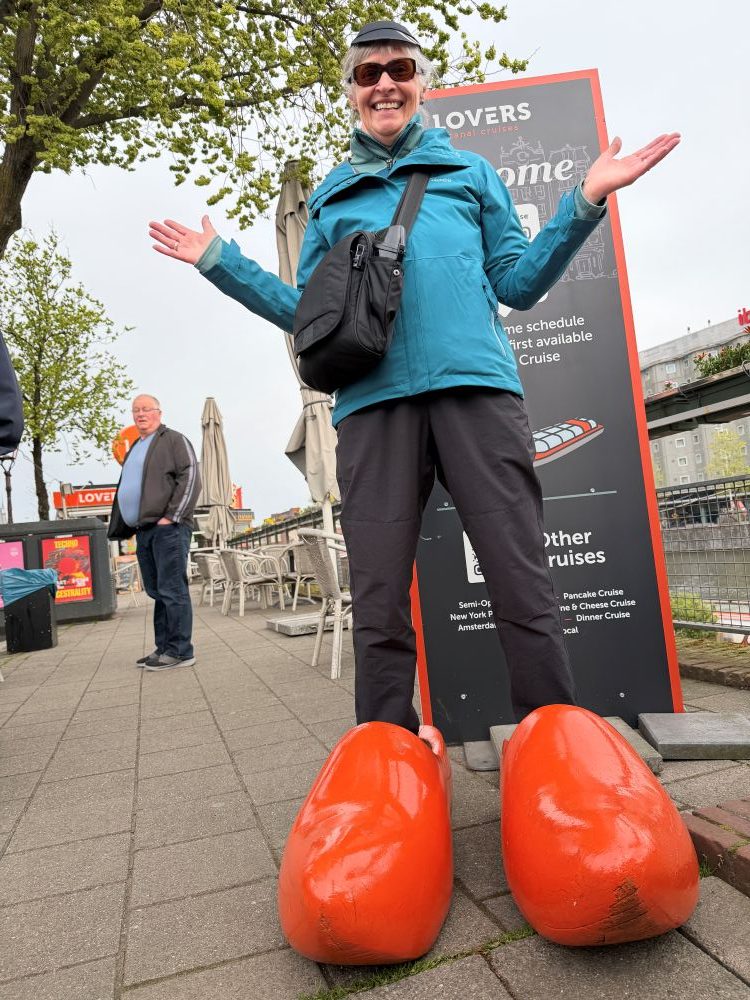
Also, the Netherlands is not on track to achieve its target to reduce carbon emissions by 55% below 1990 levels by 2030. The government’s environmental assessment agency suggests that reductions of between 45% and 53% are more likely based on current performance. That is similar to Canada’s target of 40-45% reduction based on 2005 levels. But reports suggest that Canada’s target for 2030 is also at risk, suggesting 21-28% is a more likely scenario. And Canada’s per capita emissions are more than 2X the Netherland’s and more than 3X the global average. So we here in Canada have a lot to learn from our Dutch cousins. They have left us with big shoes to fill!
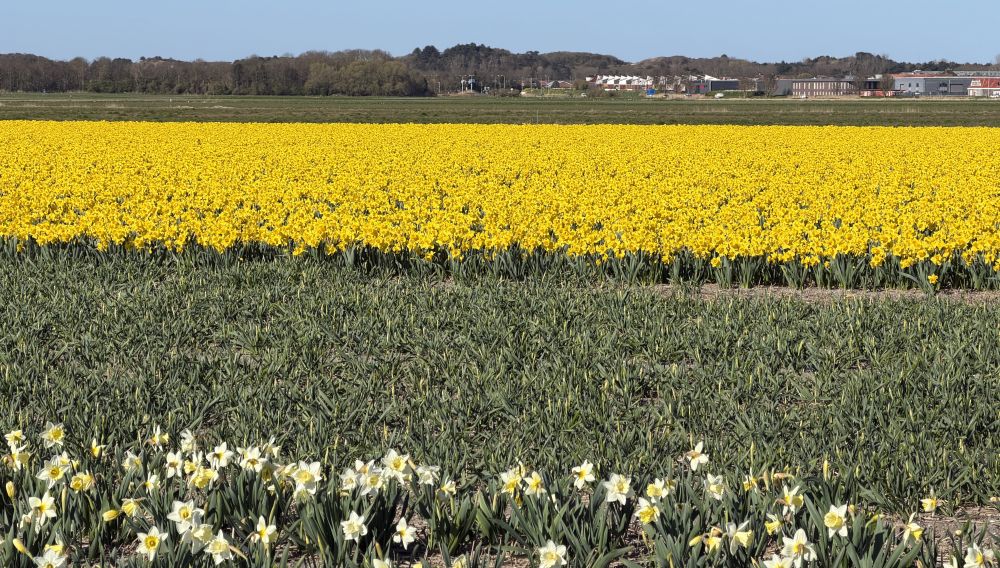
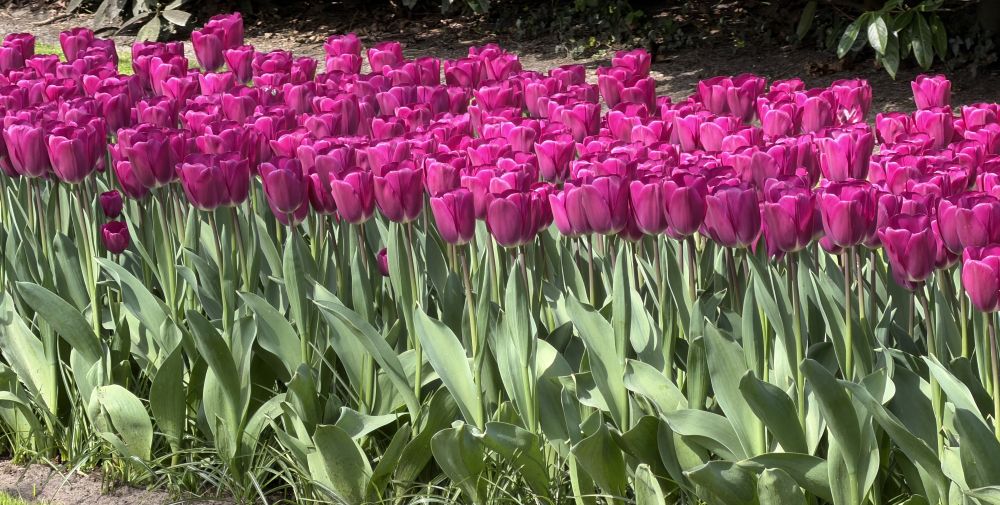
Oh, and by the way, the flowers were spectacular!